Records from the Public Utility Commission of Texas indicate that a proposed 765-kV transmission line crosses paths with land still controlled by a Chinese billionaire with ties to the Chinese Communist Party. This latest indicator adds to questions regarding the due diligence of state agencies pushing extra-high-voltage lines.
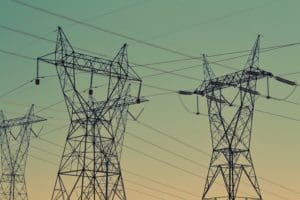
The line in question is the Howard-Solstice 765kV Transmission Line, one of the three lines in the Texas 765-kV Strategic Transmission Expansion Plan to bring energy from East Texas to the energy-rich Permian Basin. This is a component of the Permian Basin Reliability Plan, which lawmakers originally authorized as a limited fix for a specific region. Critics argue that the Public Utility Commission of Texas (PUCT), grid operator ERCOT, and electricity delivery company Oncor have expanded it into a much broader transmission buildout with minimal public input.
Brent Bennett of the Texas Public Policy Foundation estimates the project will cost $90–100 billion over its lifetime. Beyond higher costs, critics warn that this expansion sets a precedent for bureaucrats to pursue other large-scale projects with little accountability.
In March 2026, Harvest Texas and Brazos Highland Properties, which are controlled by Chinese billionaire Sun Guangxin, filed intervention requests to PUCT. Brazos Highland claimed that one or more of the proposed routes would cross its property, while Harvest Texas claimed it owned property with a habitable structure near one or more of the proposed routes.
Yaqi Zhang of Harvest Texas wrote PUCT a letter, dated April 16, asking the commission to “exclude or deprioritize Route Segment 238” because it is located roughly 1,000 meters from “the primary residence” of Morning Star Ranch, which Harvest owns.
Neither Harvest Texas nor Brazos Highland responded to requests for comment before publication.
Guangxin, who has widely reported ties with the Chinese Communist Party, has bought roughly 7 percent of all land in Val Verde County since 2015. He once planned to build a wind farm 70 miles from Laughlin Air Force Base, which he intended to connect to the Texas power grid, raising national security concerns.
Of the Guangxin land purchase, critics warned China could engage in surveillance operations against the U.S. military installation. Additionally, specialists cautioned that China’s 2017 national intelligence law compels citizens to engage in espionage when abroad.
In response to the Guangxin situation, state lawmakers passed a law in 2025 aimed at banning countries deemed dangerous by the U.S. director of national intelligence or the governor from buying Texas land. In March 2026, Attorney General Ken Paxton proposed new rules to implement the law. In 2024, Gov. Greg Abbott directed PUCT to defend against hostile actions aimed at critical infrastructure, including energy.
Neither Senate Bill 17 nor Abbott’s order imposes a direct, general legal duty on private companies to vet their counterparties or projects for any China‑related involvement.
In 2021, lawmakers first tried to address the Guangxin situation with the Lone Star Infrastructure Protection Act. In September of that year, Paxton wrote an opinion stating, “it is possible that a land lease agreement between a generation resource developer” and “a wholly or majority-owned subsidiary of a Chinese-headquartered landowner” would “allow for the possibility of direct or remote access to or control of critical infrastructure such that it would be prohibited by the Act.”
Despite lawmakers’ actions, according to Harvest Texas and Brazos Highland’s filings, Mr. Guangxin’s entities still appear to own land in Texas which are right along the path for critical state infrastructure proposed under the Public Utility Commission’s watch.
In a statement to Texas Scorecard, Omar Lopez, a spokesman for AEP Texas, one of the companies involved in the proposed Howard-Solstice 765kV Transmission Line, wrote that “we follow a comprehensive routing process that takes land use, the environment, public input, engineering guidelines and estimated costs into account to develop potential routes. The Public Utility Commission of Texas (PUCT) requires that we provide a set of geographically diverse route options for the commission to consider. The PUCT then determines the final route.”
This is not the first time questions of due diligence have been raised regarding the 765-kV transmission lines project. During an April 28 meeting of the Erath-Somervell Sub-Regional Planning Commission, Margaret Byfield of American Stewards of Liberty questioned Oncor’s due diligence on the project regarding federal wildlife preservation requirements.
American Stewards of Liberty also pointed out that PUCT’s prioritization of transmission lines over building new reliable generation goes against an order from Gov. Abbott, who appointed all five commissioners overseeing PUCT.
In a statement to Texas Scorecard, PUCT did not deny that the proposed route would cross into or come in close proximity with Guangxin’s property. Chief Press Officer Ellie Breed wrote that “State law requires the Public Utility Commission of Texas to consider the following factors when evaluating an application for a new transmission line.”
Among the factors was whether the facilities are necessary for public safety. Breed did not list national security concerns as a factor.
Michael Lucci of State Armor warned of the dangers of the proximity of CCP agents with the state’s grid. “The Chinese Communist Party wants to be able to sabotage Texas’ electrical grid. The reason is simple: Texas is America’s energy powerhouse, and in the event of Communist China starting a conflict, they want to be able to shut down Texas as a way to shut down America’s ability to fuel our defense and counter-attack,” he wrote. “Texas’ power grid needs to be protected from cyberattacks, sabotage, and even from corrupted devices like Chinese solar inverters and crypto miners that are designed to give China’s military a backdoor into the Texas electrical grid.”
As more criticism has surfaced about the proposed transmission line buildout, 25 state lawmakers have called for it to be paused.
If you are a citizen with information regarding bureaucratic overreach, please email scorecardtips@protonmail.com.