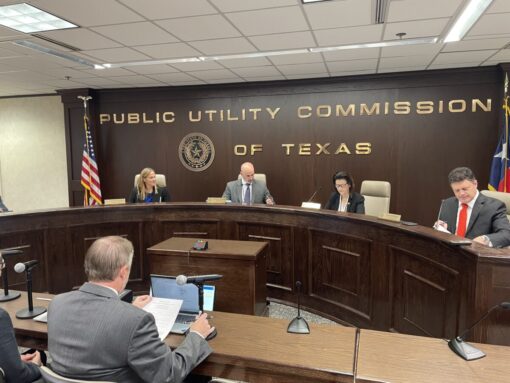
After revelations that one of the proposed routes for a new extra-high-voltage transmission line would come into proximity with land apparently still owned by a Chinese national with reported Chinese Communist Party connections, a state agency has requested that the Public Utility Commission of Texas consider a relevant security law.
The agency also requested that ratepayers’ potential losses from the new line and Texans excluded from the process be taken into consideration.
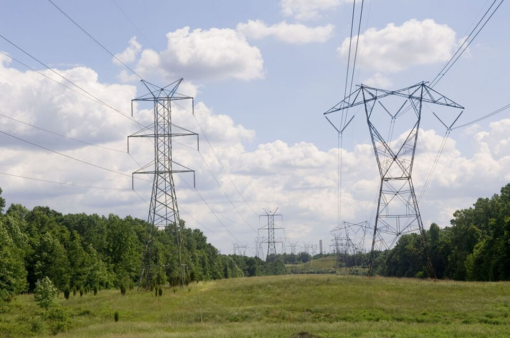
This is in reference to the Howard to Solstice line, one of three proposed 765-kV transmission lines to bring energy from East Texas to the energy-rich Permian Basin. This is a component of the Permian Basin Reliability Plan, which lawmakers originally authorized as a limited fix for a specific region. Critics argue that the Public Utility Commission of Texas (PUCT), grid operator ERCOT, and electricity delivery company Oncor have expanded it into a much broader transmission buildout with minimal public input.
Brent Bennett of the Texas Public Policy Foundation estimates the project will cost $90–100 billion over its lifetime. Beyond higher costs, critics warn that this expansion sets a precedent for bureaucrats to pursue other large-scale projects with little accountability.
The Howard to Solstice line is among those being contested before administrative law judges at the State Office of Administrative Hearings (SAOH), but PUCT commissioners will make the final decision.
The Office of Public Utility Counsel (OPUC) filed its statement with SOAH at 3:43 p.m. on May 13. That was mere hours after Texas Scorecard requested comment on the proposed route’s proximity to land owned by Chinese billionaire Sun Guangxin.
In its statement, OPUC requested SOAH and PUCT Commissioners “evaluate [whether] the proposed transmission line project complies with the Lone Star Infrastructure Protection Act.” Gov. Greg Abbott signed that measure into law in 2021. State lawmakers drafted it in response to escalating concern about Guangxin, who had planned to build a wind farm 70 miles from Laughlin Air Force Base, and secure state infrastructure from hostile actors.
State lawmakers took more action in 2025. They passed Senate Bill 17, which aimed to ban countries deemed dangerous by the U.S. director of national intelligence or the governor from buying Texas land. In March 2026, Attorney General Ken Paxton proposed new rules to implement the law.
Despite lawmakers’ actions, according to filings with PUCT, Mr. Guangxin’s entities still appear to own land in Texas along the path for one of the Howard to Solstice line’s proposed routes.
National security is one of several criticisms raised regarding the proposed transmission lines. Texans affected by the Bell County East to Big Hill transmission line have scrambled to try to file their protest in time so they can be an intervenor and participate fully in the administrative law hearing for their portion of the line.
Regarding the Howard to Solstice line, OPUC wrote that “several hundred Texans” filed comments but did not “meet the burdens necessary to maintain formal intervenor status.”
“Due to various procedural rules, which may be perceived as obscure or a bureaucratic technicality by those affected, these residents were excluded from the proceeding going forward,” OPUC wrote. “With their opinions having been expressed but now excluded, OPUC maintains that these residents still matter in determining the public interest, here and in subsequent proceedings.”
OPUC stated that these Texans’ concerns about the proposed line include impacts on safety, property values, environment, agriculture, and land use.
“The residential and small commercial customers are not the cause requiring the construction of this transmission project,” OPUC continued. “In line with the Public Utility Commission of Texas’ (Commission) longstanding adherence to the cost-causation principle, it is imperative that the interest of affected Texans, especially those now excluded from this proceeding, are not ignored and unjustly affected.”
Chief Executive and Public Counsel Benjamin Barkley, an Abbott appointee, is listed as a drafter of OPUC’s statement. The agency finished its statement by asserting its right to participate in the hearing, “and to take additional positions based on the evidence as necessary to protect the interests of residential and small commercial ratepayers.”
Abbott also appointed the head of the State Office of Administrative Hearings, and all five PUCT commissioners. Texans have called for him to stop the project.
This latest development joins growing questions about the due diligence of state agencies and private companies pushing the transmission line project. During an April 28 meeting of a local government commission, Margaret Byfield of American Stewards of Liberty questioned Oncor’s due diligence regarding federal wildlife preservation requirements.
As criticism builds, 25 state lawmakers have called for the project to be paused.
If you are a citizen with information regarding bureaucratic overreach, please email scorecardtips@protonmail.com.