A group of data center developers, energy companies, and infrastructure firms has formed a new coalition to make the economic case for large-scale development in Texas, as public opposition and state scrutiny grows.
The Lone Star Infrastructure Coalition (LSIC), composed of such entities as Lancium, Siemens Energy, electricity delivery company Oncor, and others, claims it is “helping Texas meet the need to modernize and expand the state’s infrastructure to meet growing demand.”
Data centers have increasingly received negative attention in the Lone Star State.
A recent poll, conducted in part by the Texas Public Policy Foundation, showed that a little over half of respondents supported a local ban on data centers, while a July poll regarding data centers reported that almost 80 percent of respondents expressed concerns around local community planning, water use, and impacts on the power grid.
Opinions were mixed on how necessary data centers were to Texas’ future.
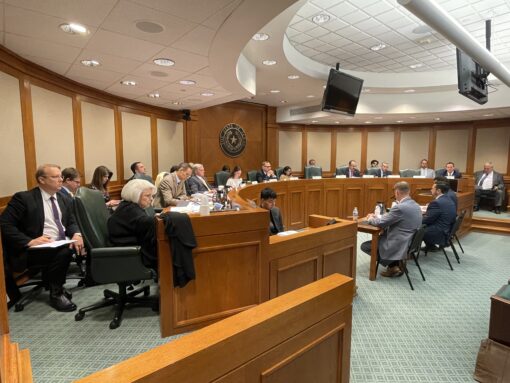
In late September, Gov. Greg Abbott called for a pause on data center permits pending the finalization of a state audit and directed authorities to penalize noncompliance with water-use reporting requirements. Shortly after, Attorney General Ken Paxton announced that hundreds of data center developments were under investigation for possibly failing to comply with such requirements.
LSIC seeks to challenge this resistance to the data industry’s movement into Texas.
Led by energy executive and former public utility commissioner Jimmy Glotfelty, LSIC says its priorities are to “strengthen local economies across Texas, secure Texas’ water future, [and] strengthen digital connectivity,” among others. The coalition officially launched at the beginning of October, and includes multiple members representing different points along the data center and AI supply chain.
Developments such as data centers “help expand the workforce, expand the goods and services that Texas produces, and the economic development that all of that creates,” according to Glotfelty. “We want to make sure the economic story gets told.”
According to Crypto Briefing, LSIC plans to ensure this story is told by waging a campaign “aimed at local communities and government officials, with a focus on transparently communicating the economic case for data centers and power projects.”
LSIC states that “Texas must accelerate new generation, transmission, pipelines, and energy delivery before capacity constraints limit future opportunity.”
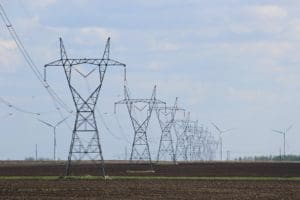
Texas’ 765-kilovolt transmission line projects, including the Strategic Transmission Expansion Plan (STEP) Permian, have also been under greater pressure.
STEP Permian proposes building three 765-kV transmission lines from East Texas into the natural gas-rich Permian Basin.
Recently, State Rep. Brad Buckley (R–Salado) and impacted landowners called into question the modeling ERCOT used to justify the projects.
Country music star Tanya Tucker joined calls for an independent audit, stating that an investigation done by ERCOT is “like asking the fox to investigate what happened in the henhouse.”
Oncor Electric Delivery Company, CenterPoint Energy, and AEP Texas are listed as members of the coalition and are significant contributors to the controversial 765-kilovolt transmission line projects.
The coalition’s formation comes after President Donald Trump recently said that those who do not embrace data centers will end up “backwards and poor.” Some have suggested that the Texas Railroad Commission could regulate data centers like the oil and gas industry.
Abbott and LSIC have not yet responded to a request for comment on the coalition and the future of data centers.