As citizens struggled to navigate a confusing process and attorneys denounced the pace of proceedings ahead of an administrative law hearing on a proposed extra‑high‑voltage transmission line, one of the judges highlighted that the state is rushing an unusually important case.
“We’ve got four days to do frankly what I think a federal court would give you a month or six weeks to do,” Administrative Law Judge Sarah Starnes said. “This case is really, really aggressively fast, and one of the biggest cases to ever come before the State Office of Administrative Hearings. I don’t think these SOAH hearings will be the end of the matter.”
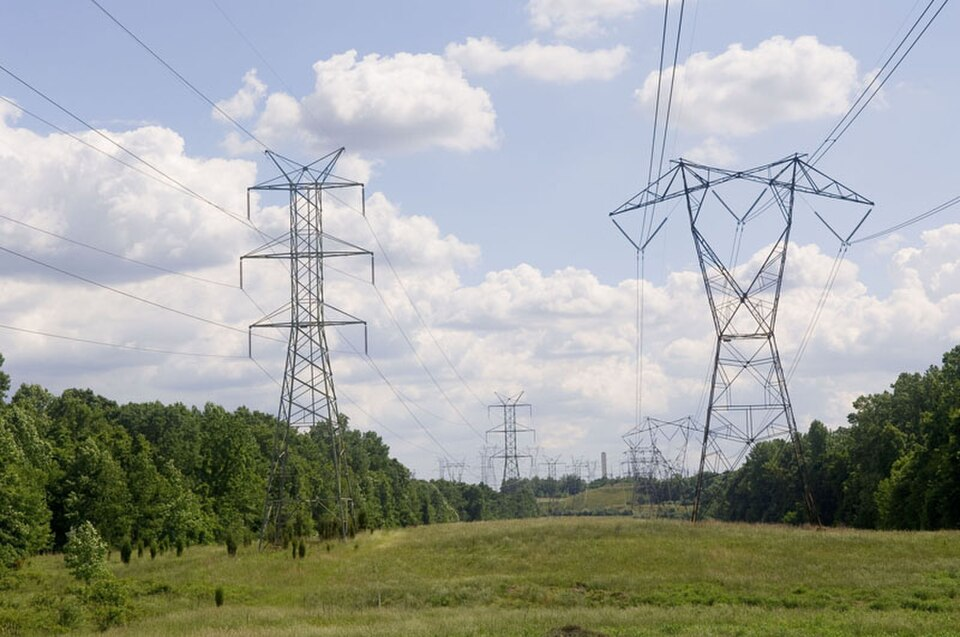
Friday’s preliminary hearing was for the administrative law case on the proposed Howard-Solstice Transmission Line. This is one of three 765-kV transmission lines in Texas’s Strategic Transmission Expansion Plan. It will carry power from East Texas to the energy-rich Permian Basin and is part of the Permian Basin Reliability Plan—which state lawmakers authorized as a targeted fix for a specific region.
Critics argue that the Public Utility Commission of Texas (PUCT), grid operator ERCOT, and electricity delivery company Oncor have expanded it into a much broader transmission buildout with minimal public input. Brent Bennett of the Texas Public Policy Foundation estimates the project will cost $90–100 billion over its lifetime.
Beyond higher costs, critics warn that this expansion sets a precedent for bureaucrats to pursue other large-scale projects with little accountability.
Texans notified that the proposed line will either cross into or come in proximity to their land have been scrambling to join the process as intervenors in order to defend their private property. Multiple parties in Friday’s preliminary hearings had attorneys representing them, but there were those who didn’t. Texans have complained of either being unable to afford an attorney or that there are no more available in the state for this kind of process.
Citizens representing themselves tried to navigate the preliminary hearing. Ann Roberts, whose family owns a 600-acre ranch, for example, asked what she had to do to be part of the hearing. She said she didn’t learn until Thursday about Kiteworks, the online system in which intervenors have to upload exhibits and testimony to be reviewed during the hearing.
Judge Starnes told Roberts it appeared she “may have been dismissed,” but reversed it so Roberts could participate. Charles Moore said that Alphonso Peredo, who had been dismissed on May 9 as an intervenor, wants to be reinstated. Administrative Law Judge Amy Davis said, “we’ll issue an order clarifying that.”
Even attorneys raised concerns about the process of the administrative law hearing.
Judge Starnes said there is only one round of cross-examination in the current hearing plan. David Brown, of the Sabinal & Frio Rivers Alliance called it a “due process issue” that there will be no opportunity to re-cross-examine witnesses. “We’re being denied the opportunity to address or redress statements admitted,” he said.
“We’re very pressured for time,” Judge Starnes said. “We’ll sort of take it as it comes. We won’t slam the door on the opportunity.”
Attorney Zach Brady, representing Hackberry Creek, protested that he wouldn’t be allowed to question a witness from Federal Airways and Airspace. Attorney Kerry McGrath, counsel for AEP Texas, said that FA&A helped in developing the routes for the Howard to Solstice transmission line. “As a CCN [Certificates of Convenience and Necessary] applicant, we can’t bring in every witness,” McGrath replied, adding that it has never been required before in a CCN case.
AEP Texas is one of the companies involved in the proposed Howard-Solstice 765-kV Transmission Line
Brady disagreed. “Hackberry Creek intervenors have the right to question the folks whose opinion we’re talking about here. It is FA&A’s work,” he argued. One of the judges told Brady that an order on this would be coming either Friday or Monday.
Some citizens are shining despite the difficulty. Judge Starnes told Ann Tarrillion—of the Medina County Pearson Community Intervenors—that she’s “more organized than most lawyers, and you have more clients.”
Others continue to struggle. Heather Wofford asked for advice on what is or isn’t allowed during the hearing. Judge Davis recommended a self-representative guide found at the State Office of Administrative Hearing website—though she cautioned that “this hearing is different.”
Critics have raised questions about the entire proposed transmission line project, with questions about “due diligence,” adherence to state security law, and the exclusion of Texans from the process. Twenty-five state lawmakers have called for it to be paused.
The Howard-Solstice Transmission Line hearing will be from May 19 to 22. It is the fourth of five hearings. The final one will be the week of June 8 on the Bell County East Switch to Big Hill line. Citizens may watch a livestream of these hearings through the SOAH YouTube channel.
The administrative law judges will make a recommendation to the PUCT Commissioners, who will make a final decision. Gov. Greg Abbott has appointed both PUCT and SOAH leadership.