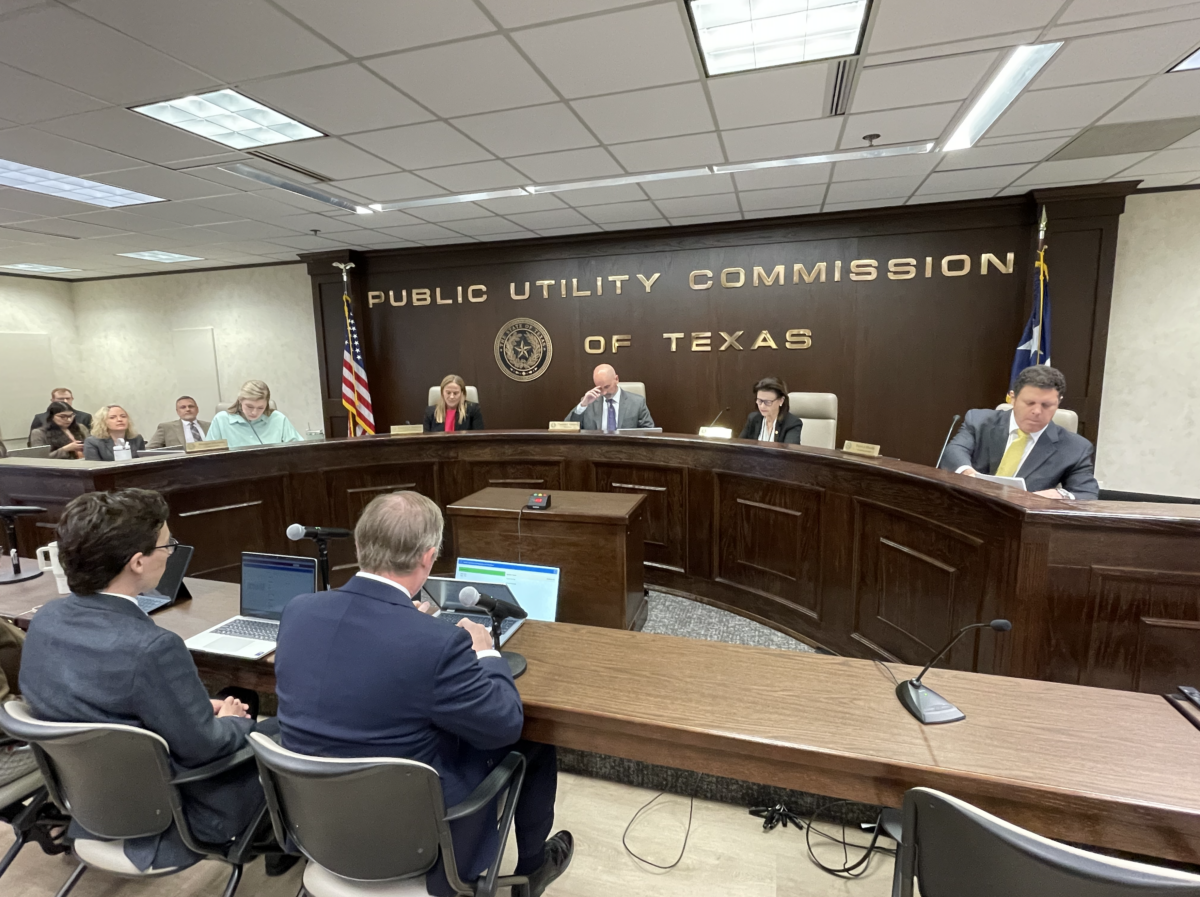
AUSTIN–The Public Utility Commission of Texas voted to extend time to the “maximum extent authorized by law” to consider rehearing motions filed on the Howard to Solstice 765-kilovolt transmission line.
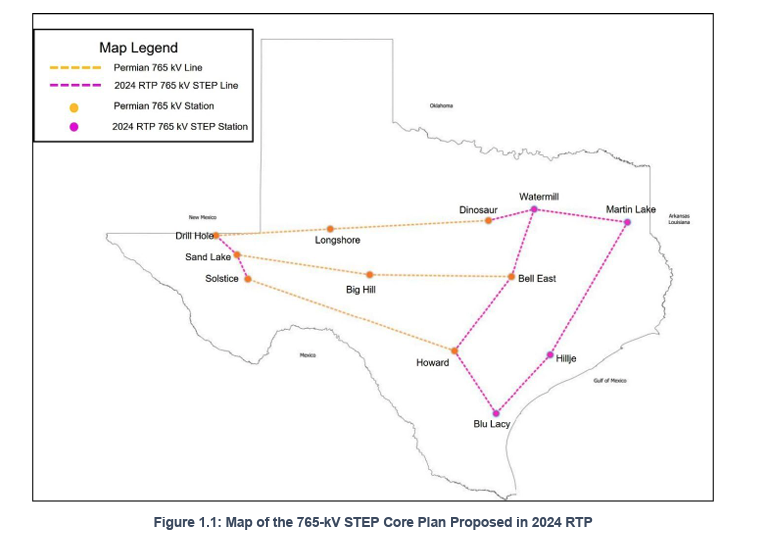
The Howard to Solstice line is a project of electric utilities AEP Texas and CPS Energy. It would span approximately 370 miles in South and West Texas from the San Antonio to Fort Stockton areas.
It is part of the 765-kV Strategic Transmission Expansion Plan (STEP) Permian, a key part of the Permian Basin Reliability Plan (PBRP). STEP Permian proposes three transmission lines, spanning more than 1,200 miles, to move power from East Texas to the natural gas-rich Permian Basin. The Howard to Solstice line is the southernmost line.
The Public Utility Commission of Texas (PUCT) had approved Howard to Solstice on September 11. Multiple parties filed rehearing motions, including pro-landowner group American Stewards of Liberty. The group argued that PUCT “wrongly found” that the PBRP established a need for more service in the Permian Basin, and had identified Howard to Solstice as part of that solution.
There’s also the question of whether PUCT is going beyond what state lawmakers instructed it to do. ASL wrote that House Bill 5066, passed in 2023, authorized the “development of a reliability plan for the Permian Basin.” ASL argued lawmakers “did not declare this Project necessary, require construction of a 765-kV import system, eliminate the Commission’s obligation under” Texas’ Public Utility Regulatory Act “to determine whether the facilities presented in this proceeding are necessary, or grant the Commission discretion to disregard” statutory requirements for the certification process.
State law requires that if commissioners do not act within 55 days from the date of an approval order, rehearing motions are overruled. They may, in a written order, extend the deadline as much as 100 days after the original approval order.
On October 15, regarding electricity delivery company Oncor’s Dinosaur to Drill Hole line, commissioners voted to extend time to the maximum amount to consider rehearing motions. On this decision, Attorney Connor Ellington of the Law Offices of Tony McDonald stated that “the utility can’t use eminent domain or start building until the order is final.”
He continued that “the PUC can’t extend its deadline past 100 days after the order was signed. If it hasn’t ruled by then, the motions are automatically denied and the order becomes final.” He also noted that extension pushes back landowners’ ability to take the matter to court.
AEP Texas and CPS Energy did not respond to a request for comment before publication.
The third line, composed of two segments from Oncor and the Lower Colorado River Authority Transmission Services Corporation, is in a holding pattern after PUCT remanded the Bell County East to Big Hill segment to the State Office of Administrative Hearings.
PUCT has come under increased scrutiny as landowners and lawmakers have raised objections and concerns about STEP Permian. Before the state Senate Business & Commerce Committee on September 30, Mark Ellis of MarketClear said Texas’ regulated monopoly structure incentivizes building projects because utility shareholders get returns any time there’s investment in a new project.
Reformers said that utilities’ electricity delivery rates and annual net revenues have grown for years under this system.
Commissioner Morgan Johnson was recused from the November 5 Howard to Solstice vote.