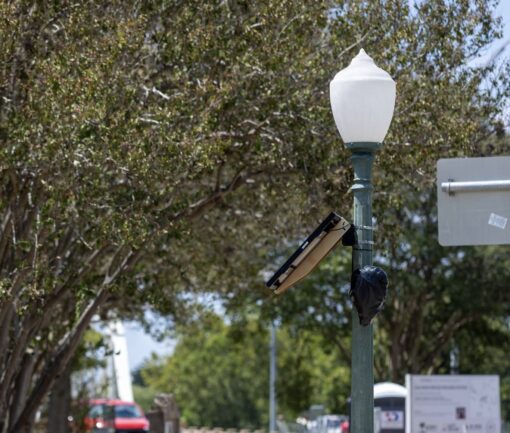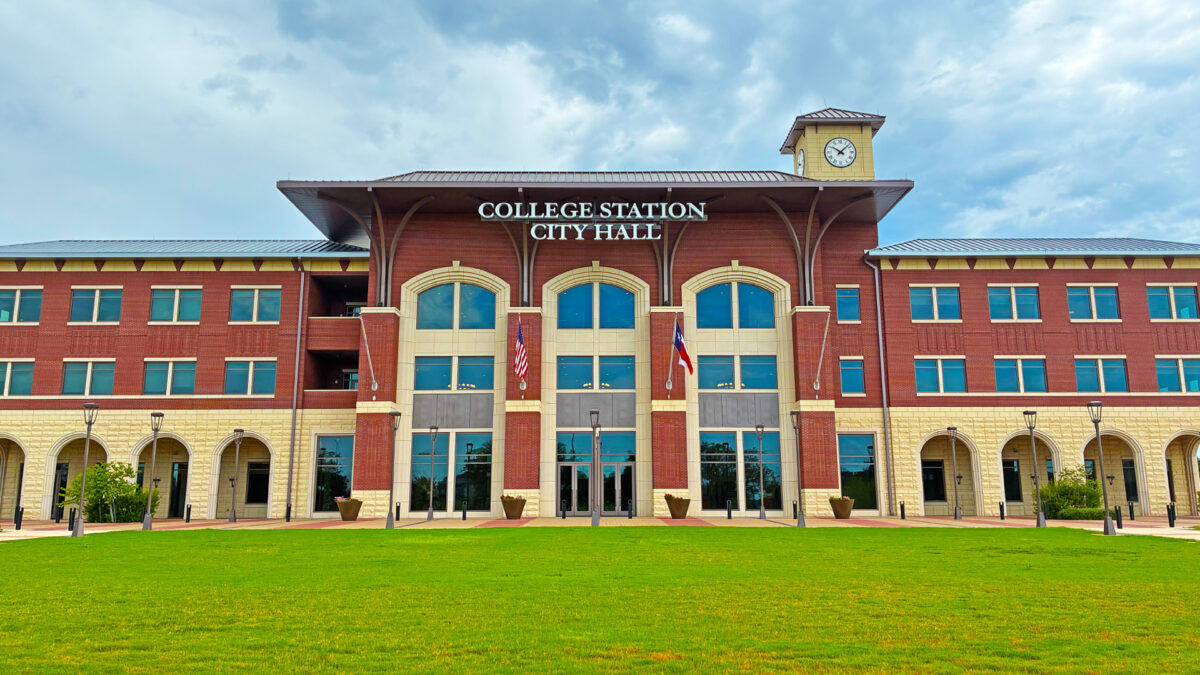
College Station plans to keep its 84 Flock Safety cameras after a 4-2 city council vote to renew the contract with the company.
Public comment focused on privacy concerns, data security, and the possibility of misuse. More than 25 residents spoke at the city council meeting for almost three hours.
According to KBTX 3, the overwhelming majority of speakers called for an end to the Flock contract.
Councilmembers Mark Smith and Bob Yancy voted against renewing the contract.
“Flock basically adds to the public sense that their privacy is being invaded,” said Smith, arguing that unlike other data collection residents already live with, “this is an easier thing to stop.”
“The problem is the vendor’s open architecture, their initial lack of concern for privacy in its initial design, and the company itself. Flock collects too much,” Yancy said. “It shares with too many. It uses inflexible contract language and marketing doublespeak.”
Flock’s automated license plate readers use AI to scan license plates and save information about a vehicle, such as make, model, color, and other identifiers like cosmetic damage or bumper stickers.
Flock allows law enforcement officers to access its database without requiring a warrant. This has raised concerns over potential violations of citizens’ Fourth Amendment rights.
Councilmembers David White, Scott Schafer, Melissa McIlhaney, and Mayor Pro Tem William Wright voted to renew the contract.
White and Schafer said they would call for guardrails within Flock technology in the future.
“Let the courts work out the privacy issue and determine what we need to do. I’m firmly in support of any guardrails, but I don’t think we need to shut the interstate down while we get those guardrails in place,” said McIlhaney.
Wright addressed the speakers who had called for an end to the Flock contract.
Wright said he was elected to represent 135,000 College Station voters. “While y’all are a slice of it, you do not represent 135,000 people.”
Ahead of the vote, College Station residents had spoken out about their concerns.
“Once the cameras are in place it becomes very easy to change what they are used for,” said College Station resident Duke Blaney in an interview with 25 News KXXV.
DeFlock alleged that, from October 2025 through July 2026, College Station used Flock’s “freeform search” feature rather than limiting searches to license plates.
“In July of this year, College Station was using the object class people search to search for things like black backpack, blue pants,” explained John Hamilton of DeFlock.
“The key difference here is that this system does not require warrants but our cell phones and everything else does,” said resident Ivan Svreck.
Residents who called for an end to the Flock contract in the city council meeting said they would continue advocating.
“Obviously, it’s a pretty disappointing outcome,” said Cody Fox, a DeFlock member. “I know John, Ivan, and I have been spending the last nine months of our lives coming, showing up every two weeks, voicing our opinion, and sitting down with some of the council members. And it’s a pretty disappointing outcome, but we’ll bounce back and keep pushing and try to keep fighting for the community.”
College Station’s Flock contract renewal comes amid a flood of nationwide backlash against Flock, including in Texas.
Multiple Texas cities have rejected, canceled, or deactivated their Flock cameras, including Bastrop, El Paso, Elgin, Wylie, Burnet, and Leander.
In August, Gov. Greg Abbott paused state funding of Flock cameras, and in September he directed the Texas Department of Transportation to stop issuing new permits for Flock cameras and other ALPRs on state-owned roads.
Flock camera controversy has reached a federal level. Testimony at a recent Senate hearing on AI-powered Flock cameras raised serious concerns about data security, warrantless surveillance, and private companies and law enforcement agencies’ ability to track Americans.
Texas lawmakers are expected to evaluate possible guardrails for the technology during the 2027 legislative session.