State Rep. Ken King wrote that testimony at a recent Texas House committee hearing showed that electricity delivery company Oncor had left out 1,400 landowners from public meetings about its proposed 765-kilovolt transmission line “until the last minute.”
He noted that Oncor then later filed an application “with a route that had not been shared with the ‘lucky’ few that have been fighting this process from the beginning.”
As previously reported, state code requires a utility to hold at least one public meeting before filing an application if at least 25 people are entitled to direct-mail notice. The rule is intended to provide affected landowners an opportunity to identify constraints and raise concerns before routes are finalized.
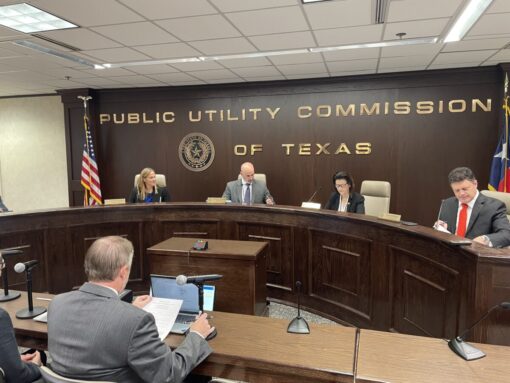
King (R–Canadian) wrote this in his August 24 letter to Pablo Vegas, President and CEO of the Electric Reliability Council of Texas (ERCOT), and to Thomas Gleeson, chairman of the Public Utility Commission of Texas (PUCT). King called the application process for transmission line projects “flawed” and said that while PUCT’s options are “limited” because of state law, ERCOT and PUCT should “work with the committee to develop legislative fixes to the current process that ensures landowners have an equitable seat at the table.”
John Burrow identified himself as one of those 1,400 landowners at the August 19 meeting of the Texas House State Affairs Committee. He said he had “never received a public meeting” before routes for a proposed 765-kV transmission line were drawn on his land.
He said that while roughly 2,800 landowners were notified of the June 2025 public meetings and had 10 months to prepare to defend their property rights before the application was filed, the 1,400 were notified after the filing and had “roughly three weeks” to intervene and defend their property.
Burrow is impacted by the Bell County East to Big Hill transmission line, a project of utility companies Oncor and the Lower Colorado River Authority Transmission Service Corporation. Spanning about 199 miles from just north of Austin to south of San Angelo, it links with the Big Hill to Sand Lake segment from south of San Angelo to Pecos.
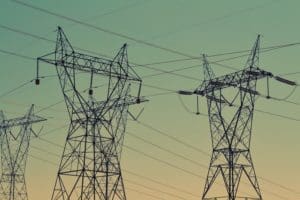
This line is part of the 765-kV Strategic Transmission Expansion Plan (STEP) Permian, a key part of the Permian Basin Reliability Plan (PBRP). STEP Permian proposes three transmission lines spanning more than 1,200 miles to move electricity from East Texas to the natural gas-rich Permian Basin. The Bell County to Sand Lake line forms the center pathway. A pro-landowner group likened the project “to hauling water to the sea.”
“Every Texas landowner deserves the same opportunity to be heard before the government authorizes eminent domain,” Burrow told lawmakers. “This just isn’t about transmission lines. It’s about equal treatment under the law, due process, and whether government will protect every Texan as strongly as it protects billion-dollar utility companies.”
Administrative law judges recommended PUCT commissioners deny the Bell County East to Big Hill application because Oncor and LCRA TSC failed to properly notify 1,400 landowners. Oncor disputed this.
Notification issues have shown up elsewhere in the STEP Permian project. Administrative law judges in Oncor’s Dinosaur Switch to Longshore Switch 765-kV line found the company failed to notify more than 1,600 impacted landowners of a public meeting.
“There should be no argument, West Texas and the Permian Basin need power, but not built on the backs of thousands of farmers and ranchers that were not given proper notice, an opportunity for adequate representation or a voice in the case as it progressed through the regulatory process,” King wrote.
King also addressed data centers, which constituted the first half of the August 19 committee hearing. He invited ERCOT and PUCT to work with him on “legislative guardrails” and find ways to help local officials “have the tools necessary to make the right decision” for families and businesses in their locality.
State Reps. Shelby Slawson (R–Stephenville) and Brad Buckley (R–Salado) commended King’s letter. Slawson echoed calls by other lawmakers and Lt. Gov. Dan Patrick for PUCT to deny all pending 765-kV applications until lawmakers reform the application process in 2027.
Rich Parsons, a PUCT spokesman, wrote, “We appreciate Chairman King’s leadership on this important issue.”
ERCOT wrote in a statement that it “stands behind its comprehensive analysis concerning the need for 765-kV transmission lines to support long-term growth and grid reliability in Texas.”
The judges for the Bell County East to Big Hill line found “flaws” in the study regulators cited as proving the need for such transmission lines.
“We respect the perspectives of state officials and landowners. As emphasized by state regulators and grid operators during the recent house hearing, the timely implementation of these projects remains critical for meeting Texas’ growing energy needs and maintaining the reliability of our state’s electric grid,” Oncor wrote in a statement. “We have consistently engaged with state officials and landowners throughout the development of these projects and are committed to continuing to work with them to help address concerns while supporting the infrastructure essential to Texas’ future.”
LCRA did not respond to a request for comment before publication.
PUCT is set to discuss three segments of the STEP Permian lines on August 28.