AUSTIN—An attorney representing Oncor disputed administrative law judges’ findings that the company had not followed state regulations. He also said state law requires action on a proposed extra-high-voltage line—contradicting the law’s author and the state’s top regulator.
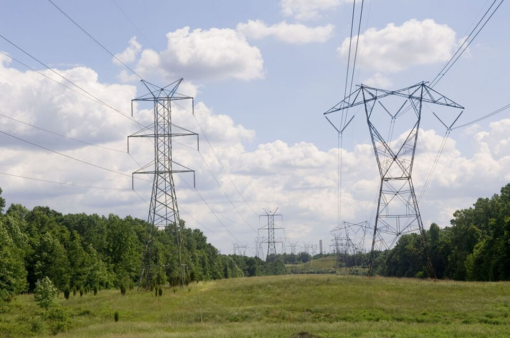
This is about electricity delivery company Oncor’s proposed Dinosaur to Drill Hole 765-kilovolt transmission line. This line would span approximately 390 miles from near Glen Rose to the Culberson–Reeves county line.
The line is composed of two segments: the Longshore Switch-Drill Hole Switch line and the Dinosaur to Longshore line. On Friday, Texas’ Public Utility Commissioners voted to consolidate these two segments “on the issue of need for the transmission lines and associated facilities.”
Legal Authority
This is part of the 765-kV Strategic Transmission Expansion Plan (STEP) Permian, a key part of the Permian Basin Reliability Plan (PBRP). STEP Permian proposes three transmission lines spanning more than 1,200 miles to move electricity from East Texas to the natural gas-rich Permian Basin. The Dinosaur to Drill Hole line forms the northern import path. A pro-landowner group likened the entire STEP Permian project “to hauling water to the sea.”
The Texas Public Policy Foundation estimates the lifetime cost of all STEP projects ERCOT approved through December 2025 at nearly $100 billion.
Critics have argued that the Public Utility Commission of Texas (PUCT), the Electric Reliability Council of Texas (ERCOT), and Oncor transformed a regional reliability directive into a de facto statewide 765‑kV grid plan without state lawmakers’ authorization. At the center of that dispute is 2023 law House Bill 5066.
At PUCT’s August 21 hearing of the Dinosaur to Drill line, attorney Jaren Taylor, representing Oncor, read to PUCT commissioners Courtney Hjaltman and Katherine Jackson and Chairman Thomas Gleeson sections of the law stating that PUCT “shall develop a plan to implement each reliability plan,” and “ensure timely development and approval of necessary transmission service improvements.” Taylor claimed the law “is not a study bill,” and that it “demands action and it very much tells us what to do.”
Gleeson has said in hearings of both state Senate and House committees that HB 5066 did not explicitly mandate 765-kV lines. Rather, that was a PUCT decision. HB 5066’s own author, State Rep. Charlie Geren (R–Fort Worth), has also disputed that his law authorized a 765-kV buildout.
Notice to Landowners
Taylor addressed administrative law judges’ rebuke of Oncor. Judges Pratibha Shenoy and Brent McCabe found Oncor was not in compliance with state requirements that utilities hold at least one public meeting before filing an application when at least 25 people would be entitled to direct-mail notice.
The judges wrote that after public meetings in June 2025, Oncor added new route links that impacted approximately 1,650 additional property owners. These owners, they wrote, were not notified of a public meeting before Oncor filed its application with PUCT.
The judges cited a recent Texas Fifteenth Court of Appeals opinion warning that a state agency may not disregard its own rules. In Public Utility Commission of Texas v. City of Denton, the court ruled that PUCT failed to follow its public notice requirements when it made a significant change to a rate-filing package.
Taylor claimed Judges Shenoy and McCabe’s Proposal for Decision “contorts” the code, and that the code is actually “permissive in its timing.”
He noted adding routes after a public meeting is normal. “Take a sample of any 15 dockets at your commission, including the two you approved yesterday,” he said. “All those dockets you will find, after the public meeting, links were modified, links were added. ALJs found the notice sufficient. You found the notice sufficient.”
Vanessa Halford, executive director of White Horse Christian Academy in Stephenville, expressed concern about the proposed line’s proximity to her school, which she said has grown from 13 students in 2016 to almost 300 now. She said Oncor informed her the line going through her property is the “best meets” line, and would bisect the land in half with her home on one side and the school on the other.
“I explained that our school was not represented on their maps and that the proposed line would only be 247 feet from the playground, and that the parents were already expressing concerns about potential health and safety issues,” she told commissioners. “I also raised concerns about transmission line workers having appropriate background checks when working so close to young children. Oncor’s response to my concerns is that they would negotiate with me if the line was selected.”
Attorney David Brown, representing White Bluff Holdings, said the line doesn’t go over White Horse. “It comes through a hayfield about 800 feet from the school and about 800 feet from the house that was mentioned,” he said. “I hate to come across as Darth Vader here, but there are a lot of people who are going to be impacted by this line who don’t want it.”
Halford wants a better process. “The health and safety of my children and my school are not negotiable,” she said. “I understand the importance of strengthening our electric grid, but there has to be a better process. Landowners deserve accurate information, and communities deserve to be heard.”
She is one of many landowners impacted by the STEP Permian lines who have cried out for help. They have appealed directly to lawmakers at state legislature committee hearings—one before the Senate in July and another before the House in August.
Need
PUCT spokesperson Rich Parsons explained the effect of commissioners consolidating the Longshore Switch-Drill Hole Switch and Dinosaur to Longshore segments and constraining consideration to “need” only. “The issue of need will be considered under the consolidation. All other issues in these cases will be considered by the Commission in each separate docket,” he wrote.
The alleged need for STEP Permian has come under increasing scrutiny. Administrative law judges for the Bell County East to Big Hill 765-kV case cited intervenors’ evidence of new and planned natural gas generation in the Permian Basin that could reduce or eliminate the need for the proposed transmission path. The judges wrote that the new generation warranted consideration as an alternative to “unprecedented transmission expansion.”
The judges also found that Oncor and the Lower Colorado River Authority Transmission Services Corporation did not prove sufficient generation would be available to send power westward through the proposed central line.
Additionally, lobbyist and former PUCT commissioner Will McAdams admitted that temporary power generators, like diesel, could possibly be deployed to buy more time to consider the STEP Permian lines.
Gleeson shut down Elena Folgueras, an attorney representing pro-landowner group American Stewards of Liberty, when she tried to bring up the Bell County case. He said, “We have to contain everything we’re talking about to” the cases on that day’s agenda.
After hearing landowners’ outcries, lawmakers want PUCT to step aside and let them take over. Lt. Gov. Dan Patrick and State Sen. Charles Schwertner (R–Georgetown) called for PUCT to deny all pending applications until after lawmakers have reformed the approval process.
In an August 21 letter, 31 members of the Texas House called for PUCT to do the same. Gov. Greg Abbott, who has appointed all five PUCT commissioners, has called for “guidelines and guardrails” on transmission line expansion.
PUCT Commissioners Patrick Rhode and Morgan Johnson were not present at Friday’s hearing.
Gleeson said commissioners will make a decision later and should “be deliberative about the decision that we can make on how to proceed in this case.” This line and the southern line—Howard to Solstice—are on PUCT’s August 28 agenda.
If you are a citizen with information regarding bureaucratic overreach, please email scorecardtips@protonmail.com.