Administrative law judges are recommending that state regulators deny an application to build a proposed 765-kilovolt transmission line. The judges noted that utilities failed to properly notify 1,400 landowners and that there are “flaws” in the study regulators cited as proving the need for such transmission lines.
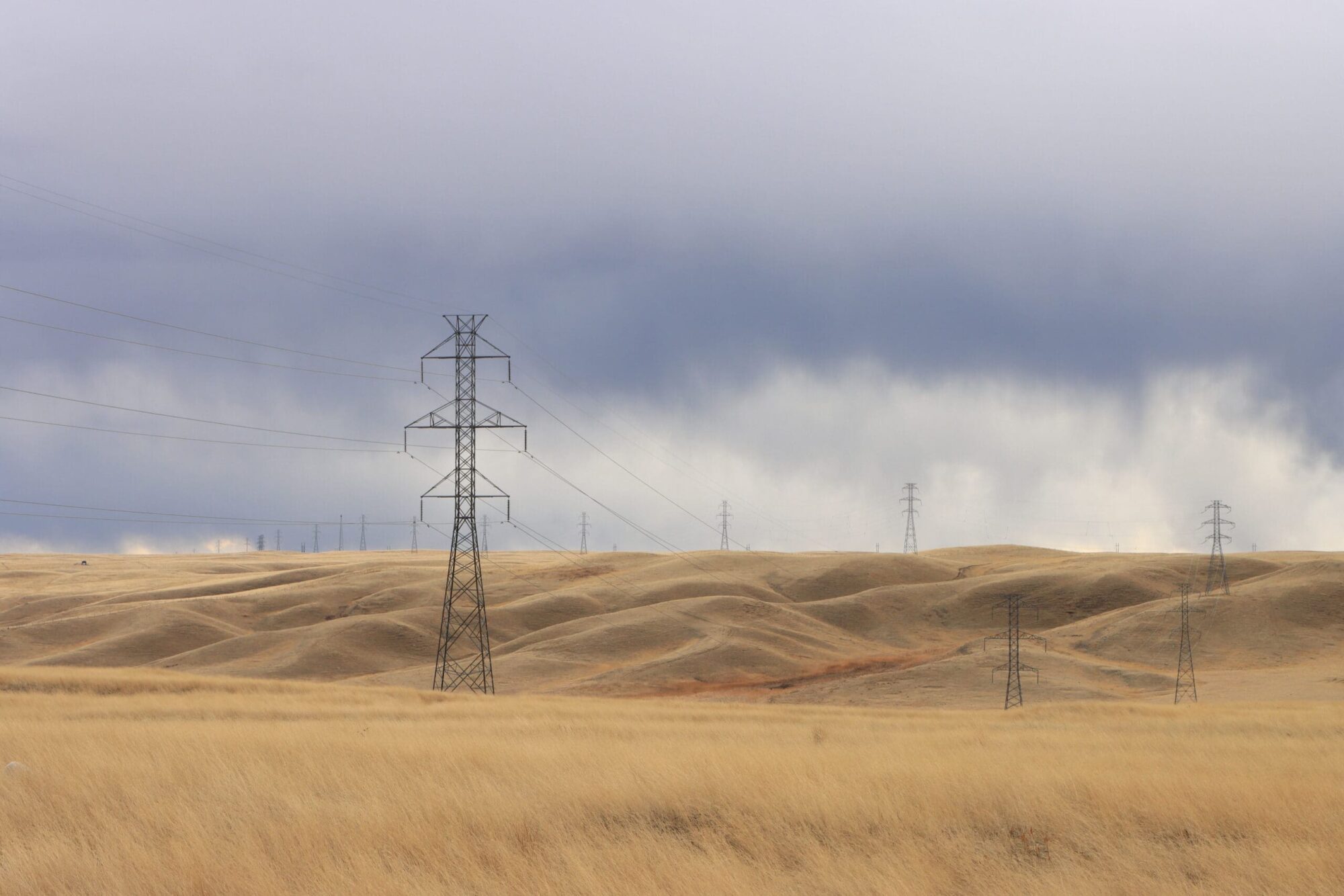
This is regarding the 765-kV Bell County East to Big Hill transmission line, proposed by utility companies Oncor and the Lower Colorado River Authority Transmission Services Corporation. Spanning more than 200 miles from just north of Austin to south of San Angelo, it links with the Big Hill to Sand Lake segment from south of San Angelo to Pecos.
This line is part of the 765-kV Strategic Transmission Expansion Plan (STEP), a key part of the Permian Basin Reliability Plan (PBRP). STEP proposes three transmission lines spanning more than 1,200 miles to move electricity from East Texas to the natural gas-rich Permian Basin. A pro-landowner group likened the project akin “to hauling water to the sea.”
The Texas Public Policy Foundation estimates the lifetime cost of all STEP projects ERCOT approved through December 2025 at more than $90 billion, to be borne by ratepayers.
The Bell County to Sand Lake line forms the center pathway called Import Path 2.
Findings
On Thursday, Judges Linda Brite, Linda Burgess, and Dee Marlo Chico recommended to the Public Utility Commission of Texas (PUCT) that “Oncor and LCRA’s applications for the proposed Bell County East-to-Big Hill Project and the Big Hill-to-Sand Lake Project be denied.”
The judges concluded the utilities did not establish that the projects are necessary and failed to comply with notice requirements designed to give affected landowners a chance to participate before the application was filed.
PUCT approved the Permian Basin Reliability Plan after ERCOT cited expected power demand from oil and gas operations, cryptocurrency mining, and other major loads. But the judges said the record did not substantiate the underlying forecast needed to justify Import Path 2.
In particular, the judges found “flaws” in the methodology of a 2022 S&P Global study used to forecast oil and gas electrification demand in the region.
According to the judges, the study’s projections relied on “wish list” scenarios and corporate pledges rather than confirmed loads, and later analysis undercut its premise that producers needed immediate grid electrification to reduce absolute greenhouse gas emissions.
The judges also found that the utilities did not prove sufficient generation would be available at Bell County East to send power westward through Import Path 2. They additionally cited intervenors’ evidence of new and planned natural gas generation in the Permian Basin that could reduce or eliminate the need for the proposed transmission path.
The record includes evidence of 37 planned or announced natural gas generation projects in the Permian Basin, West Texas, and the Panhandle-Northwest region totaling approximately 39.5 gigawatts of new capacity.
The judges wrote that the new generation warranted consideration as an alternative to “unprecedented transmission expansion.”
Landowner Notice Failure
The judges’ proposal for decision (PFD) separately recommends denial because of failures in the public notice process.
State rules require utilities to provide direct notice to affected landowners and to hold at least one public meeting before filing an application when 25 or more people would qualify for direct notice.
The judges found that the utilities failed to provide the required public meeting process to approximately 1,400 later-affected landowners. They separately found the utilities did not use current county tax rolls for application notice, with more than three dozen owners receiving untimely notice.
According to the PFD, the utilities sent 2,809 invitations to landowners for public meetings held in June 2025. But after subsequently expanding the study area and adding roughly 400 miles of route links, the companies’ March 2026 application notices were mailed to roughly 4,200 parties.
Approximately 1,400 additional landowners did not receive an invitation to a public meeting addressing the routes eventually filed with the PUCT.
The judges rejected the companies’ position that holding a public meeting based on the preliminary route segments was sufficient.
“When a project of this scale and complexity adds—after a public meeting—hundreds of miles of new route links and roughly 1,400 new landowners entitled to application notice,” the judges wrote, “a utility cannot force newly affected landowners entitled to application notice out of the community input process if there are 25 or more.”
They found that the normal remedy could no longer cure the missed opportunity for public participation, making denial “the only meaningful remedy remaining.”
In a statement, Oncor said it “strongly disagree[s]” with the administrative law judges’ recommendation to deny the projects, including the conclusions that the lines are not needed and that the utilities failed to satisfy landowner-notice requirements.
The company argued that ERCOT, PUCT, and other administrative law judges considering Permian Basin import-path cases have repeatedly confirmed the need for additional transmission capacity.
Oncor also disputed the conclusion that planned natural gas generation could supplant the proposed lines, arguing that new generation alone cannot resolve transmission constraints.
While acknowledging the projects’ impact on landowners, the company maintained it complied with applicable notice laws and regulations and said it will address the PFD’s conclusions as the cases proceed before PUCT commissioners.
Lawmakers Respond
State Reps. Brad Buckley (R–Salado) and Shelby Slawson (R–Stephenville) publicly praised the recommendation.
Buckley urged PUCT to deny the certificate application.
Slawson said the judges’ findings on Import Path 2 support denying all five pending 765-kV transmission line applications while lawmakers address the issue during the 90th Legislature.
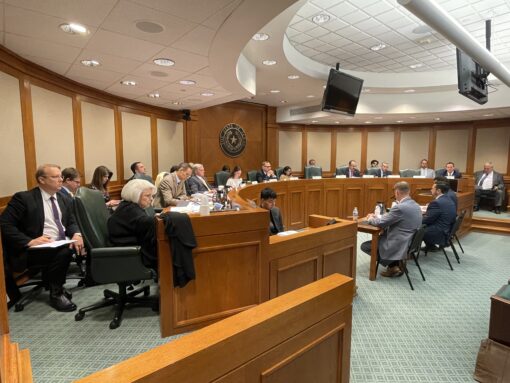
In a Friday letter, 31 members of the Texas House called for the PUCT “to deny the applications for Certificates of Convenience and Necessity” in the pending five 765-kV before PUCT, “and allow the Texas legislature to reform the CCN process to ensure transparent, fair treatment of Texas landowners.”
Lawmakers cited testimony from a Wednesday House committee hearing regarding failures of due process for landowners and confirmation that the state law used to justify these projects “did not contemplate 765-kV lines, and the 180-day timeline in the bill was never intended for projects running transmission lines all across the state.”
Critics have long argued that PUCT, ERCOT, and Oncor transformed a regional reliability directive into a de facto statewide 765‑kV grid plan without state lawmakers’ authorization.
A Senate hearing in July led Lt. Gov. Dan Patrick and State Sen. Charles Schwertner (R–Georgetown) to call on PUCT to reject pending 765-kV applications until lawmakers can reform the approval process.
Gov. Greg Abbott, who appointed all five PUCT commissioners, has also called for guidelines and guardrails on transmission expansion.
The final decision rests with PUCT commissioners.