Texas education advocates are applauding a new national crackdown on the epidemic of sexual abuse in K-12 schools, while also asking how impactful the initiative will be compared to the state’s own efforts to protect students from predatory teachers.
The U.S. Department of Education’s Office for Civil Rights (OCR) launched the initiative on July 10 and issued new guidance instructing school districts to comply with federal laws or risk losing federal funds.
“Our schools must protect America’s children. Parents should never have to wonder whether their kids’ school employs and protects sexual predators,” said U.S. Secretary of Education Linda McMahon. “Schools that receive federal funding have a duty to protect students, report sexual misconduct honestly, and follow the law.”
McMahon cited a “troubling and recurring pattern” of “credible reports of sexual abuse and harassment by adults in positions of authority going uninvestigated, institutional cultures that protect employees over students, and administrative indifference that allows predatory conduct to fester.”
She said the department will hold schools accountable through vigorous enforcement of the Elementary and Secondary Education Act (ESEA) and Title IX of the Education Amendments of 1972.
McMahon’s “Dear Colleague” letter instructs all school districts to:
- Promptly respond to educator sexual misconduct allegations
- Conduct meaningful investigations of alleged misconduct
- Set policies that prohibit “passing the trash”
- Report data on adult employees’ sexual abuse of students
The initiative also targets 20 school districts—including one in Texas—for investigation based on past data submissions.
“Make no mistake, the Department will fully enforce federal law and employ every resource at its disposal to protect children from sexual predators,” wrote McMahon. “This epidemic of nationwide sexual abuse in our schools must end.”
Texas “Setting the Standard”
Texas has its own epidemic of adult sexual predators abusing school children.
In just the past few years, hundreds of Texas children have been targets of alleged sex crimes by school employees. Texas Scorecard maintains a map of known educator sexual misconduct arrests.
In 2025, a shocking analysis of school employee misconduct data by advocacy group Texas Education 911 prompted significant legislative reforms—including Senate Bill 571 to strengthen misconduct reporting requirements and House Bill 4623 to allow civil lawsuits in school sex abuse cases.
Since then, the Texas Education Agency has rolled out a new educator misconduct reporting dashboard and other transparency tools.
Texas is now “setting the standard” with its educator misconduct data collection and reporting, according to Aileen Blachowski, who spearheaded Texas Education 911’s analysis of the state’s data and advocated in the legislature for the group’s proposed policy solutions.
Blachowski said it’s “high time” the federal government requires all schools to capture this data.
She said Texas is “a good case study of a state taking effective action”—one McMahon and her department could learn from.
But Blachowski told Texas Scorecard more is needed, including educator pre-screening similar to that of other government employees who work with vulnerable populations.
“None are more vulnerable than our school children,” she added.
Texas has also had laws on the books since 2017 that prohibit “passing the trash”—moving educators accused of sexual misconduct to different schools or allowing them to quietly resign and find work in other districts.
Failure to report sex abuse allegations can cost a Texas school administrator their professional credentials and result in criminal charges.
SB 571 strengthened educator misconduct reporting requirements.
State Sen. Paul Bettencourt (R-Houston)—who authored the measure as well as the state’s earlier protections against passing the trash—recently told Texas Scorecard there are still a few “small cracks” he wants to fill, adding that the culture of “looking the other way” has to end.
“I’ll do whatever I have to, to get everybody,” said Bettencourt.
North East ISD
McMahon said OCR is opening investigations into 20 school districts whose 2023-24 Civil Rights Data Collection submissions “contained responses that suggest that districts might not be addressing staff on student sexual misconduct appropriately.”
North East Independent School District in San Antonio is the only Texas school system targeted for a federal investigation.
Online OCR records show three pending Title IX investigations against North East ISD opened in 2024—one for sexual harassment and two for retaliation.
Educator misconduct complaint data obtained from the TEA and posted online by the Open Records Project shows 35 North East ISD employees were reported to the TEA for sexual misconduct from 2021 through August 2025. Twelve were subsequently placed on the state’s Do Not Hire Registry.
Two more North East ISD educators were reported to the TEA for sexual misconduct in 2026: Christopher Wooten and David Terrazas. Both worked at the district’s LEE High School.
Education accountability advocate Paula Hilliard told Texas Scorecard she was “surprised” that North East ISD is the only school district in the state under federal scrutiny but “pleased” the department is taking the nationwide crisis seriously.
Hilliard said she has asked North East ISD school board members “multiple times” what administrative changes they were making to improve employee screening and monitoring practices in response to stronger state misconduct reporting and liability laws.
“Unfortunately, not once to my knowledge has there been an agenda item to address this serious concern,” she said.
“I look forward to learning what the department discovers and hope that the Texas Legislature can also make necessary reforms to end this scourge,” added Hilliard.
Breaking a Culture of Silence
Protecting children from sexual predators in schools requires more than legislation; it requires a cultural change within educational institutions.
“Sexual predators who operate within the walls of American schools depend on institutional silence and complacency,” McMahon wrote in her guidance letter to school officials. “Such silence is not only a moral failure but also violates federal law designed to protect our most defenseless class of citizens—our children.”
Few know better than Chief Matt Antkowiak—a retired police chief, school safety expert, child advocate, and abuse survivor.
“Institutional silence doesn’t protect children, it protects predators,” Antkowiak told Texas Scorecard. “In my three decades in law enforcement and focused efforts within school safety, I’ve seen that the greatest failures rarely begin with one offender. They begin when warning signs are minimized, victims aren’t believed, or adults choose the reputation of an institution over the safety of a child.”
In 2025, Antkowiak testified to Texas senators on SB 571, based on his unique perspectives and experience dealing with childhood sexual abuse. He’s since written a book on the subject.
“The Department of Education’s initiative sends an important message: schools have both a moral and legal obligation to act decisively, report misconduct, and ensure that no employee who poses a risk is quietly moved to another campus or district,” said Antkowiak. “Protecting a school’s reputation can never come before protecting a child.”
Another expert, educator sexual abuse researcher Charol Shakeshaft, agrees.
School employees sexually abuse students “because they can,” wrote Shakeshaft in her groundbreaking book “Organizational Betrayal: How Schools Enable Sexual Misconduct and How To Stop It,” which is referenced in the federal guidance.
“Despite our claims that we love our children and do everything for them, when push comes to shove, we care more about protecting the adult than protecting the child,” added Shakeshaft.
Federal threats of financial penalties may prompt better reporting compliance from schools, but Shakeshaft and others note such penalties are rarely imposed.
They also don’t deter predators.
Some Texas lawmakers support public calls to make child rape a capital offense subject to the death penalty, joining six other states prepared to challenge a narrow 2008 U.S. Supreme Court decision against putting child rapists to death.
Texas child advocates will be watching the federal initiative and also preparing for the 2027 Legislative Session. For a third consecutive session, the Republican Party of Texas has made protecting Texas children a legislative priority.
The priority includes mandating “rigorous employment screening procedures” for all public school employees to prevent abuse in schools, protecting whistleblowers who report educator misconduct, and codifying an inspector general for education with broader investigative authority.
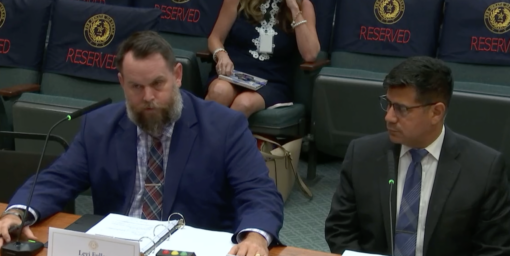
The state’s first inspector general for educator misconduct, Levi Fuller, was appointed to the newly created position by the TEA commissioner in February. Fuller is charged with implementing the many legislative reforms enacted last year as well as clearing the big backlog of misconduct complaints.
Complaints about sexual misconduct and/or reporting failures in Texas schools can be reported here.
Federal complaints about a school’s failure to respond appropriately to sexual misconduct can be filed here.