Four of the five seats on the Public Utility Commission of Texas will be up for appointment when Democrat Gina Hinojosa is sworn in as governor in January.
“She’ll be able to replace 3 of the 5 right away,” Dr. Brent Bennett of the Texas Public Policy Foundation explained. “Either she can forge a compromise with the [Texas] Senate to get them confirmed, or she can wait until June 1 to make recess appointments.”
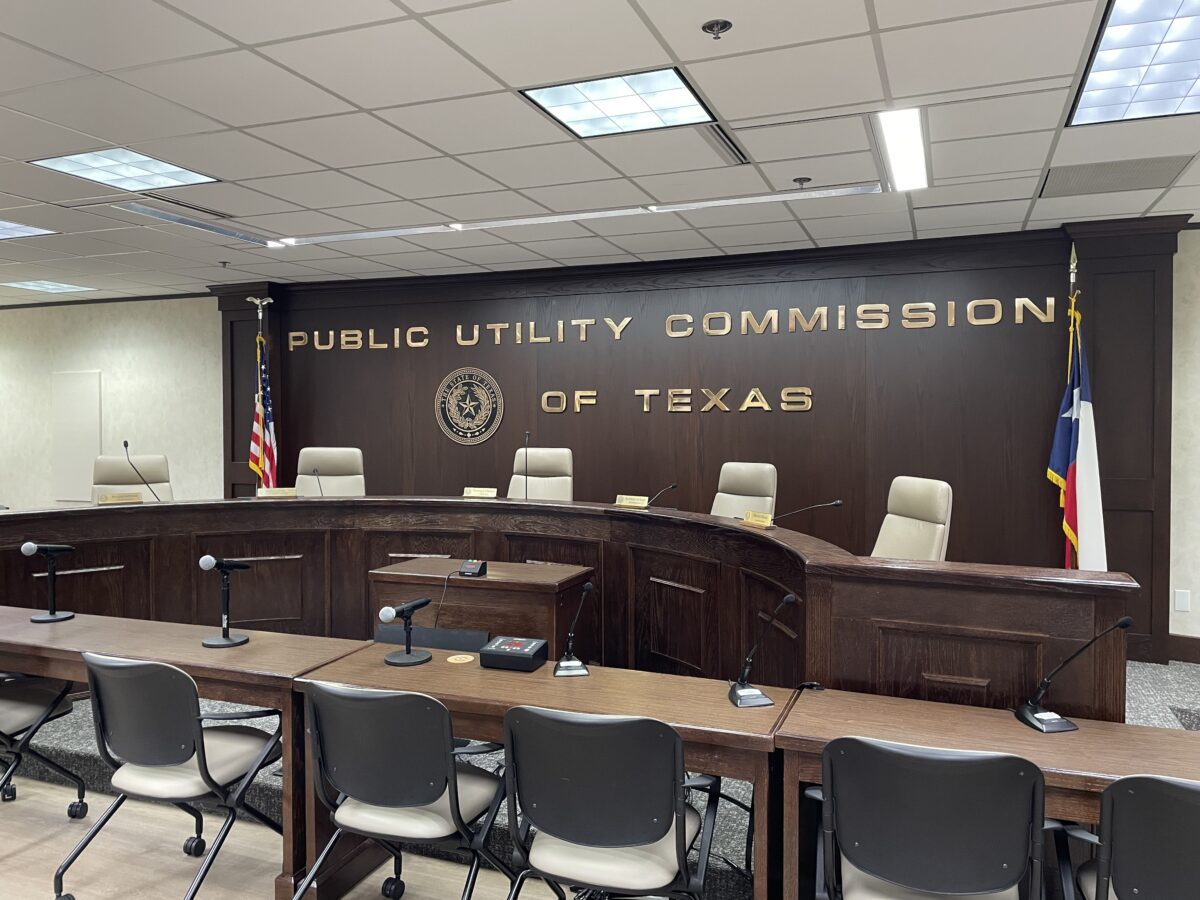
The Public Utility Commission of Texas (PUCT) oversees the Electric Reliability Council of Texas (ERCOT), the state’s electric grid manager. PUCT’s duties also include setting transmission and distribution rates for electricity, as well as rates for water and wastewater utilities, and land-based telephone lines.
The five commissioners are appointed by the governor and confirmed by the Texas Senate. Hinojosa defeated incumbent Gov. Greg Abbott and Democrats gained control of the Texas House on November 3. Republicans, though, maintained their majority control of the Senate.
Four PUCT seats will be up for grabs next year.
PUCT Commissioner Courtney Hjaltman’s term expired on September 1, 2025. Because outgoing Gov. Greg Abbott has not nominated a replacement, Hinojosa could do so upon being sworn in.
Commissioners Patrick Rhode and Morgan Johnson, meanwhile, are recess appointments that have not yet been confirmed by the Senate. Hinojosa has the option of renominating them or choosing a replacement.
Additionally, Abbott appointed Rhode to complete a term that expires September 1, 2027. Upon that date, Hinojosa would have the option of re-appointing him or choosing someone else.
Johnson’s term, if confirmed, would expire September 1, 2031.
Commissioner Kathleen Jackson’s term is set to expire September 1, 2027, at which point Hinojosa could make a recess appointment.
Senate confirmations require two-thirds approval from those present. Republicans currently hold 19 of the chamber’s 31 seats, two short of a supermajority.
Chairman Thomas Gleeson’s term expires September 2029. However, the chairman serves at the pleasure of the governor. While Gleeson will remain at PUCT, it will be up to Hinojosa if Gleeson remains chairman or if she picks another commissioner to hold that title.
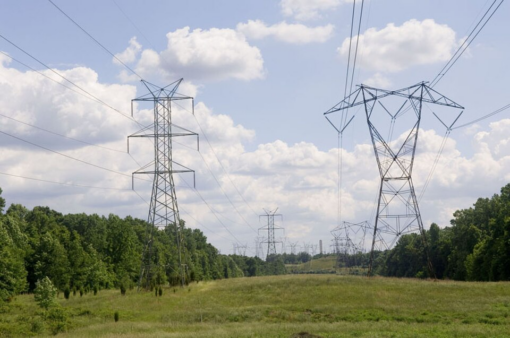
PUCT is the nexus of a conflict over the 765-kV Strategic Transmission Expansion Plan (STEP) Permian, a key part of the Permian Basin Reliability Plan (PBRP). STEP Permian proposes three transmission lines spanning more than 1,200 miles to move power from East Texas to the natural gas-rich Permian Basin. Because of how natural gas can be used to generate electricity, a pro-landowner group likened this project to “hauling water to the sea.”
Impacted landowners and lawmakers called for PUCT to wait to act until after the 2027 legislative session.
PUCT decided not to consider rehearing motions for the first transmission line, setting in motion the commissioners’ August approval to be final, pending potential legal appeals or future actions by lawmakers.
The other two lines are in a holding pattern after PUCT voted to extend time to consider rehearing motions on one, and remanded a segment of the other to the State Office of Administrative Hearings.
STEP Permian is part one of a larger project. The ERCOT board endorsed STEP’s two other phases in December 2025. These are the STEP Western and STEP Eastern 765-kV lines.
The Texas Public Policy Foundation estimates the lifetime cost of all STEP projects ERCOT approved through December 2025 at nearly $100 billion.
There is also a potential final buildout that would tap into the Panhandle region’s abundant wind and solar resources.
Critics have argued that PUCT, the Electric Reliability Council of Texas (ERCOT), and electricity delivery company Oncor transformed a regional reliability directive into a de facto statewide 765‑kV grid plan without an explicit vote by state lawmakers.
Hinojosa expressed support for increasing wind and solar power in Texas, something which critics have said would raise prices and decrease grid stability, and wants to slow down the 765-kV projects, “involve stakeholders, use least harm routes, and go through proper notice and comment timelines.”
As an alternative to the 765-kV project, Dr. Bennett advocated for lawmakers to reform the electricity market, enabling the development of more reliable energy generation where it is needed. “Market reforms would definitely decrease ratepayer bills in the long-run (short-run outcomes depend on the weather year-to-year),” he stated.
Hinojosa wants to order the PUCT to freeze electricity rates for residential customers.
“Governor-elect Gina Hinojosa’s proposed electricity rate freeze makes no sense. It didn’t work in New Jersey. It won’t work in Texas,” posted American Energy Works CEO Jason Isaac. “The costs are still there. They’re not going away. It’s just a marketing gimmick to make people feel like they’re saving money when they aren’t.”
He told CBS Austin that the PUCT cannot freeze rates.
The legislature will convene on January 12, 2027. Hinojosa will be sworn into office seven days later.