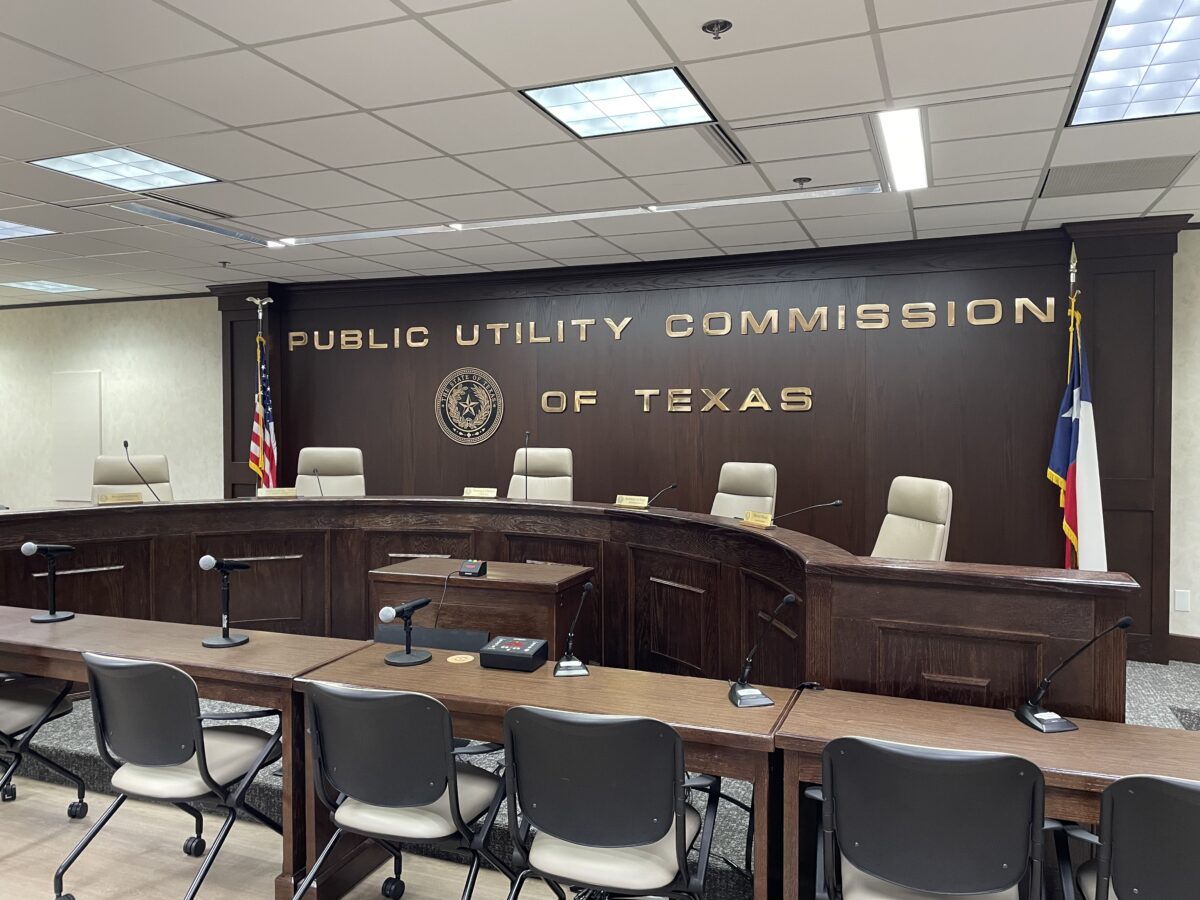
Thomas Gleeson, chairman of Texas’ Public Utility Commission, recommended commissioners remand a proposed 765-kilovolt transmission line back to the State Office of Administrative Hearings.
Administrative law judges Linda Brite, Linda Burgess, and Dee Marlo Chico recommended the commission deny the project applications. They found utilities failed to properly notify 1,400 landowners and that there are “flaws” in the study regulators cited as proving the need for such transmission lines.
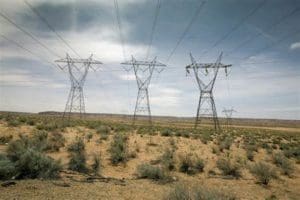
The applications are for the 765-kilovolt Bell County East to Big Hill and Big Hill to Sand Lake transmission line segments. Projects of Oncor and the Lower Colorado River Authority Transmission Service Corporation (LCRA TSC), these segments would connect into one line spanning nearly 400 miles from just north of Austin to Pecos.
This line is part of the 765-kV Strategic Transmission Expansion Plan (STEP) Permian, a key part of the Permian Basin Reliability Plan (PBRP). STEP Permian proposes three transmission lines spanning more than 1,200 miles to move electricity from East Texas to the natural gas-rich Permian Basin. The Bell County to Sand Lake line forms the center pathway. A pro-landowner group likened the project “to hauling water to the sea.”
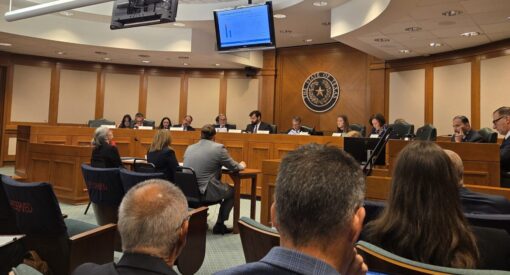
Each STEP Permian segment has gone through an administrative law hearing process through the State Office of Administrative Hearings (SOAH), after which administrative law judges write a Proposal for Decision (PFD) to the Public Utility Commission of Texas (PUCT), which makes the final decision.
On August 20, Brite, Burgess, and Chico’s PFD was published. On September 9, PUCT published Gleeson’s memo.
He wrote that the judges’ PFD did not address all of the issues PUCT had identified to be addressed in its March 30, 2026 preliminary order. Until that is rectified, he argued it would be “premature” for PUCT commissioners to hear oral arguments on these segments.
Gleeson named two specific issues: whether the proposed transmission facilities are necessary to meet federal and state reliability standards, and estimated congestion cost savings for customers that “may result” from the project.
“The ALJs find only that ‘the Applicants present the Project as one that will import power from across the state of Texas into the Permian Basin and not that the proposed facilities necessary to meet state or federal reliability standards,’” Gleeson wrote. “This finding is not responsive to preliminary order issue 11. Issue 11 solicits a recommendation on whether the proposed transmission facilities are in fact necessary to meet state or federal reliability standards, not how the applicants characterize the project.”
As previously reported, Judges Brite, Burgess, and Chico concluded the utilities did not establish that the projects are necessary and failed to comply with notice requirements designed to give affected landowners a chance to participate before the application was filed.
They also found that the utilities did not prove sufficient generation would be available at Bell County East to send power westward through the line, and cited intervenors’ evidence of new and planned natural gas generation in the Permian Basin that could reduce or eliminate the need for the proposed transmission path.
Gleeson wants the judges to consider “specific North American Electric Reliability Corporation (NERC) reliability standards,” and that “Ultimately, the Commission should not make a final decision on need without a recommendation from the ALJs regarding whether the proposed facilities are necessary to comply with federal (and state) standards.”
He also wants them to “address whether failure to comply with the relevant NERC standards would” mean breaking federal law. He noted that “may require additional briefing.”
NERC is the federally certified Electric Reliability Organization, overseen by the Federal Energy Regulatory Commission (FERC). NERC develops reliability standards for the bulk power system for FERC consideration.
FERC has up to five commissioners, nominated by the president and confirmed by the U.S Senate. Two were sworn in during the second Trump administration, the rest during the Biden administration. FERC did not respond to a request for comment before publication.
Regarding congestion costs, Gleeson wrote the judges did not address “the estimated congestion cost savings for consumers resulting from the proposed transmission facilities.”
In its 2025 State of the Market Report by Potomac Economics, ERCOT’s independent market monitor, congestion is when flows hit transmission operating limits. In this situation, the market redispatches higher-cost generation.
The Texas Public Policy Foundation estimates the lifetime cost of all STEP projects ERCOT approved through December 2025 at nearly $100 billion, to be borne by ratepayers.
Gleeson wrote that “the ALJs must address issue 13 regarding whether there are estimated congestion cost savings for consumers that may result from the proposed transmission facilities.”
“On remand, the SOAH ALJs should fully address issue numbers 11 and 13 from the Commission’s March 30, 2026, preliminary order,” he added. “I do not know that it is necessary to reopen the record to address these issues, but I would defer to the judgment of the SOAH ALJs on this point. Consistent with the rule, a supplemental or amended PFD may be required to address these additional issues.”
Critics have argued that the PUCT, the Electric Reliability Council of Texas (ERCOT), and Oncor transformed a regional reliability directive into a de facto statewide 765‑kV grid plan without state lawmakers’ authorization.
A growing number of lawmakers have asked PUCT to deny all pending 765-kV applications until after the 2027 legislative session.
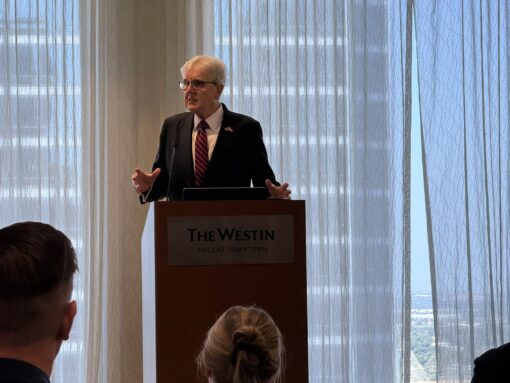
On August 29, PUCT commissioners gave final approval to the first of the three proposed lines. Yesterday at a Texas GOP breakfast, Lt. Gov. Dan Patrick said he was “very disappointed” with PUCT. “I don’t like it when any major agency takes action only four months before session,” he said.
PUCT will discuss the Bell County East to Sand Lake line on September 11.