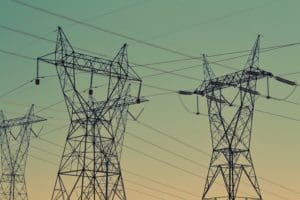
A pro-transmission coalition has expressed opposition to state lawmakers’ request to delay a proposed 765-kilovolt transmission line project until after the Texas Legislature takes up the issue in 2027. The letter argued that delays increase costs and extend electric reliability risk.
Critics say the project does not address the core issue of overreliance on unreliable energy sources and the failure to build more reliable alternatives.
Lawmakers and landowners have argued that the Public Utility Commission of Texas (PUCT), the Electric Reliability Council of Texas (ERCOT), and electricity delivery company Oncor transformed a regional reliability directive into a de facto statewide 765‑kV grid plan without an explicit vote by state lawmakers.
Texans for Responsible Infrastructure Investment (TRII), a coalition of which Oncor is a founding member, criticized the letter from State Sen. Kevin Sparks (R–Midland) and State Rep. Brad Buckley (R–Salado) requesting PUCT delay a final decision on the entire project.
TRII argued that delays would “threaten” line construction and electric delivery. The July 22 TRII press release further argued delay “could” result in the state losing its waiting spot “for highly specialized pieces of equipment in a constrained supply chain,” and “slows” the state economy’s growth ability.
Dr. Brent Bennett of the Texas Public Policy Foundation doesn’t believe the need is as immediate as transmission service providers claim. “[I]t is important to emphasize that the need for the 765-kV lines is driven by ERCOT’s assumption that Texas will continue to experience overbuilding of wind and solar, leading to new gas generation being constrained,” he wrote.
Sparks and Buckley agreed. They wrote that STEP “is predicated upon an assumption that future generation in Texas will primarily be wind and solar, and it does not consider any alternative scenarios that involve more gas generation.”
TRII called the lawmakers’ statement “inaccurate, as noted by ERCOT’s record,” and stated that the PBRP “attributes more than half of near-term transmission need to oil and gas activity,” and that “observed demand” in ERCOT’s Far West zone has grown at roughly 11 percent a year for ten years. The release read that the proposed 765-kV lines “deliver firm, dispatchable power into the basin” and would “move surplus power out when local generation runs high.”
However, Dr. Bennett has written that more transmission “does not ensure that enough new reliable generation will be built to meet demand and could even discourage such generation if the transmission provides wind and solar favorable market access.” He noted that “many” industrial consumers want access to wind and solar power in order to meet net-zero emissions goals, instead of building reliable on-site natural gas generation.
“The influence of the net-zero goals and federal subsidy-driven actions of many industrial consumers bears emphasizing,” he wrote.
As previously reported, transmission service providers admitted that reliance on wind and solar power is driving Permian Basin energy issues.
A central conflict-point between state lawmakers and TRII is the reported growth of reliable natural gas generation in development. Sparks and Buckley wrote that there are now 71 gigawatts of gas generation in the development queue, compared with 22 GW in 2024 when ERCOT completed the PBRP. Twenty GW is in the queue for West Texas, which they wrote far outpaces the “roughly 6 GW of transfer capacity” of the proposed 765-kV lines.
This new planned gas generation is one of the parameters Sparks and Buckley asked ERCOT to include in a “full reappraisal” of the 765-kV project.
“But a queue position is a place in line, not a plant that is guaranteed to get built,” TRII wrote. “Only about 22 percent of projects in ERCOT’s interconnection queue are ever built — the highest completion rate of any grid in the country, which still means roughly four in five never come online.”
Dr. Bennett and Jamila Piracci argued in a TPPF paper that the current electric environment suppresses building new natural gas generation in favor of wind and solar and advocated for “broader wholesale market reform.”
They wrote that the costs Texas ratepayers would bear for these transmission lines “would would be more palatable … if they were truly necessary, but these investments are simply a regulatory solution to a broken wholesale market and other factors that are incentivizing wind and solar generation in far-flung locations while making it impossible to build natural gas generation closer to new demand.”
Sparks and Buckley asked for PUCT to review “market design changes that could bring online the gas generation needed to avoid the 765-kV lines.”
TRII objected. “The review the letter calls for is what has also already happened: the Permian Basin Reliability Plan was approved in October 2024, with the 765kV voltage confirmed in April 2025, after two years of study that compared lower-voltage alternatives and found they require far more new lines to move the same power,” the TRII release read.
The three 765-kV lines are split into five interconnected segments that PUCT must approve. On June 17, PUCT commissioners unanimously voted to “abate” consideration of the first segment until they consider the third, which is expected sometime in August.
The Texas Senate Business & Commerce Committee announced it will hold a July 29 public hearing on the state grid and ways to mitigate the 765-kV lines’ impacts on private property rights.