This article was updated with responses from the Lower Colorado River Authority and Oncor.
Late Monday, 34 state representatives and nine state senators filed an amicus brief in support of a request for the Public Utility Commission of Texas to defer on deciding the need on any section of the three proposed 765-kV lines.
On June 5, pro-landowner group American Stewards of Liberty asked commissioners to wait on deciding until the hearing process for the Bell County East to Big Hill segment had run its course.
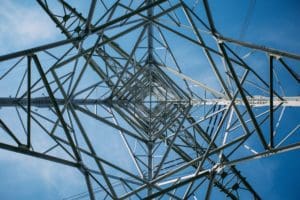
These extra-high-voltage lines are supposed to bring power from East Texas to the energy-rich Permian Basin, which critics have equated to “hauling water to the ocean.” They form part of ERCOT’s 765‑kV Strategic Transmission Expansion Plan (STEP), developed in the context of the Permian Basin Reliability Plan (PBRP).
In the brief, lawmakers stated these lines “would transport power, but they would not add generation capacity” or new supply in the Permian Basin.
According to a study from the Texas Public Policy Foundation, estimates for the 765-kV projects approved through December 2025 are at about $33 billion, with lifetime costs approaching $100 billion. The study reported that the Public Utility Commission of Texas (PUCT) and the Energy Reliability Council of Texas (ERCOT) transformed a regional reliability directive into a de facto statewide 765‑kV grid plan without an explicit legislative vote on that broader buildout.
The three lines were divided into five segments, each of which went through an administrative law hearing where affected landowners sought to defend their property from proposed routes that cross or come near their land. Administrative law judges then make recommendations to PUCT commissioners, who will make the final decisions on each segment.
With thousands of landowners facing new permanent corridors, easements, or eminent domain takings, the brief argued that the proposed transmission lines’ capital costs are “nearly five times” those of the transmission lines lawmakers authorized in 2005, with four to five times the lifetime costs.
Once the utilities’ applications for certificates of convenience and necessity are granted, the brief warns that irreversible stages of the process begin, including eminent domain actions and commitments that allow utilities to recoup project costs from ratepayers.
The brief claims that ERCOT ignored the study it commissioned and instead relied on one from S&P Global. As previously reported, the S&P Global study features environmental, social, and governance (ESG) guidance, which one critic called a “political agenda,” and emissions‑reduction goals as key motivations for electrification.
Lawmakers pointed out that a major driver for the 765-kV lines are oil and gas companies electrifying their operations in order to meet emissions goals. The lawmakers argue these goals could be met by pursuing diesel and gas generation on site instead.
According to the TPPF report attached to the brief, the need for transmission lines could be reduced or eliminated by introducing four to five gigawatts of new gas generation in West Texas, plus some re‑siting of generation elsewhere.
“The amicus brief signed by me and my colleagues is a request to pause and ensure the Commission fully evaluates the overall need before moving forward,” State Rep. Brad Buckley (R–Salado) wrote in a statement. “The scale and cost of these proposed transmission projects warrant a complete and deliberate review before irreversible decisions are made.”
The following lawmakers filed the brief: State Reps. Trent Ashby (R–Lufkin), Keith Bell (R–Forney), Greg Bonnen (R–Friendswood), Buckley, David Cook (R–Mansfield), Charles Cunningham (R–Humble), James Frank (R–Wichita Falls), Sam Harless (R–Spring), Caroline Harris Davila (R–Round Rock), Richard Hayes (R–Hickory Creek), Hillary Hickland (R–Belton), Janis Holt (R–Silsbee), Andy Hopper (R–Decatur), Carrie Isaac (R–Wimberley), Jeff Leach (R–Allen), Terri Leo Wilson (R–Galveston), Shelley Luther (R–Sherman), Don McLaughlin (R–Uvalde), Brent Money (R–Greenville), Candy Noble (R–Lucas), Mike Olcott (R–Aledo), Angelia Orr (R–Itasca), Katrina Pierson (R–Rockwall), Keresa Richardson (R–McKinney), Alan Schoolcraft (R–McQueeney), Joanne Shofner (R–Nacogdoches), Shelby Slawson (R–Stephenville), David Spiller (R–Jacksboro), Valoree Swanson (R–Spring), Ellen Troxclair (R–Lakeway), Cody Vasut (R–Angleton), Wes Virdell (R–Brady), Trey Wharton (R–Huntsville), and Terry Wilson (R–Georgetown); and Senators Donna Campbell (R–Bulverde), Pete Flores (R–Pleasanton), Louis Kolkhorst (R–Brenham), Brent Hagenbuch (R–Denton), Bob Hall (R–Edgewood), Joan Huffman (R–Houston), Angela Paxton (R–McKinney), Charles Perry (R–Lubbock), and Kevin Sparks (R–Midland).
PUCT commissioners, who are appointees of Gov. Greg Abbott, will review the application for the first 765-kV line segment on June 18. Last month, 25 state lawmakers called for the project to be paused.
Utility companies AEP Texas and CPS Energy did not respond to a request for comment before publication. PUCT Chief Press Officer Ellie Breed wrote, “We are unable to comment on active contested cases.”
LCRA spokesperson Clara Tuma wrote “We will not be commenting outside of the pleadings we have filed. LCRA TSC and Oncor submitted a response to the American Stewards of Liberty, Inc. motion in the PUC docket.”
“Oncor is aware of the amicus brief filed by certain members of the Texas Legislature in the pending Public Utility Commission of Texas (PUCT) proceedings related to 765kV transmission projects. We respect these legislators’ input as we work to meet rising electric demand throughout the state,” Oncor spokesperson Andrew Clark wrote. “These matters are part of an ongoing, docketed regulatory process, and Oncor respects the role of the PUCT and all stakeholders in thoroughly reviewing the record. Oncor remains focused on working within the established regulatory framework to ensure power can flow reliably throughout the ERCOT region.”