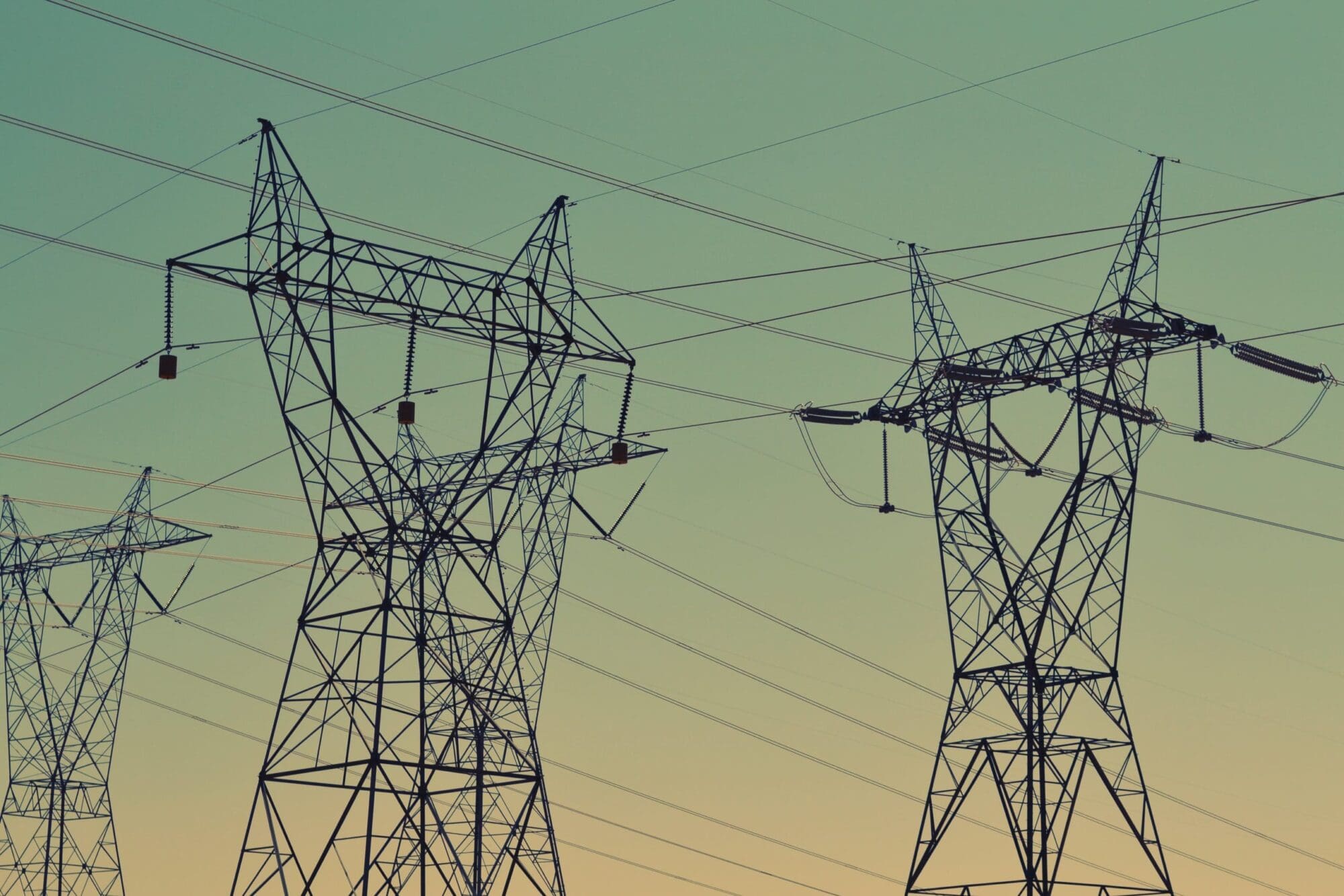
Twenty-five state lawmakers signed a letter requesting a meeting with the Public Utility Commission of Texas about the proposed construction of three 765-kV transmission lines from East Texas into the energy-rich Permian Basin.
Known as the Permian Basin Reliability Plan, American Stewards of Liberty has stated this project is “akin to hauling water to the sea.” Lawmakers originally authorized it in House Bill 5066 as a limited fix for a specific region. Critics have said the Public Utility Commission of Texas (PUCT), grid operator ERCOT, and Oncor expanded it into a broader buildout of these 765-kV transmission lines with minimum public input.
Brent Bennett of the Texas Public Policy Foundation has estimated the project would cost $90 to $100 billion over its lifetime. Aside from Texans being burdened by increased costs, the expansion could lead to bureaucrats launching other large projects with little direct accountability.
In a May 11 letter to Chairman Thomas Gleeson and the other four commissioners, the group of lawmakers expressed concern that the Texas 765-kV Strategic Transmission Expansion Plan “exceeds the intended scope of HB 5066.” This letter is an escalation from a May 5 letter, from State Reps. Brad Buckley (R–Salado), Drew Darby (R–San Angelo), Hillary Hickland (R–Belton), and Ellen Troxclair (R–Lakeway), and State Sen. Pete Flores (R–Pleasanton), that focused only on the Bell County East-Big Hill 765-kV line.
Both letters referenced a December 2024 ERCOT recommendation that, in the lawmakers’ view, shows only two of the three lines are needed by 2030. As in the May 4 letter, lawmakers wrote in this latest letter that instead of building transmission lines, prioritizing “dispatchable energy generation within the Permian Basin … could provide greater long-term grid reliability.”
Dispatchable energy refers to electrical generation from sources such as natural gas, clean coal, and nuclear. The Permian Basin is rich with natural gas.
“It is our concern that increasing transmission capacity without increasing energy generation falls short of the solutions discussed in the aftermath of Winter Storm Uri,” the lawmakers wrote. “In fact, it was made abundantly clear that Texas needs more dispatchable energy generation and prioritizing transmission of energy produced by renewables does nothing to address a significant problem in the mix of electrical generation we currently have in our state.”
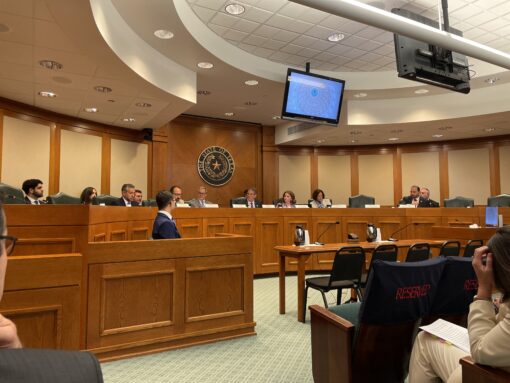
A University of Texas presentation in an April 1 Senate committee hearing projected that the state’s energy generation mix would be up to 62 percent of solar, wind, and batteries by 2029.
“As the Texas Legislature prepares to review issues related to energy generation, storage, and transmission ahead of the 90th Legislative Session, it is prudent to pause further progress on this project,” the lawmakers wrote. “Taking time for a fuller policy review and broader public discussion will help ensure that any long-term decisions are informed by a complete understanding of their potential impacts.”
Critics have asked for a prudent pause. Landowners scrambling to respond to eminent domain threats brought forth by the project have been widely reported, with State Sen. Kevin Sparks (R–Midland) expressing concern about how much land the state would seize.
During an April 28 meeting of the Erath-Somervell Sub-Regional Planning Commission, Margaret Byfield of American Stewards of Liberty, a consultant to the commission, questioned Oncor’s due diligence on the project regarding federal wildlife preservation requirements.
The 20 lawmakers who joined the original five in this new letter are State Reps. David Cook (R–Mansfield), Charles Cunningham (R–Humble), Caroline Harris Davila (R–Round Rock), James Frank (R–Wichita Falls), Richard Hayes (R–Hickory Creek), Carrie Isaac (R–Wimberley), Jeff Leach (R–Allen), Janis Holt (R–Silsbee), Terri Leo Wilson (R–Galveston), Shelley Luther (R–Sherman), Brent Money (R–Greenville), Matt Morgan (R–Richmond), Tom Oliverson (R–Cypress), Keresa Richardson (R–McKinney), Don McLaughlin (R–Uvalde), Joanne Shofner (R–Nacogdoches), Valoree Swanson (R–Spring), Cody Vasut (R–Angleton), Wes Virdell (R–Brady), and Terry Wilson (R–Georgetown).
Gov. Greg Abbott appointed the five PUCT commissioners. PUCT Chief Press Officer Ellie Breed provided a statement to Texas Scorecard.
“Because the Permian Basin Reliability Plan transmission applications are active contested cases, the rule against ex-parte communication prevents PUCT commissioners from discussing issues relating to the applications,” she wrote. “We are working to accommodate their meeting request with PUCT executive leadership to ensure open and continuing communication.”
May 13 is the deadline for property owners to file testimonies if they have been notified that a proposed route along the Bell County-East Big Hill 765-kV line would be within 500 feet of their property and have filed a protest.
If you are a citizen with information regarding bureaucratic overreach, please email scorecardtips@protonmail.com.