This article has been updated since publication.
The Middle Trinity Groundwater Conservation District wants to protect its aquifer from potential contamination from Oncor’s 765-kilovolt transmission line. It asked the Public Utility Commission of Texas to require Oncor to consult and coordinate with it.
“Consultation and cooperation with the appropriate GCD should be no different than the other agencies listed in the Order, unless the Commission is taking the position that groundwater is an inherently different environmental resource not worthy of such protection,” the district wrote in its rehearing motion.
Oncor argued the requested change “is unnecessary,” and PUCT should uphold its decision. Commissioners will consider extending time to act on this and other rehearing motions on October 15.
This is taking place as the Texas Water Development Board is working on its plan to conserve and expand the state’s water supply.
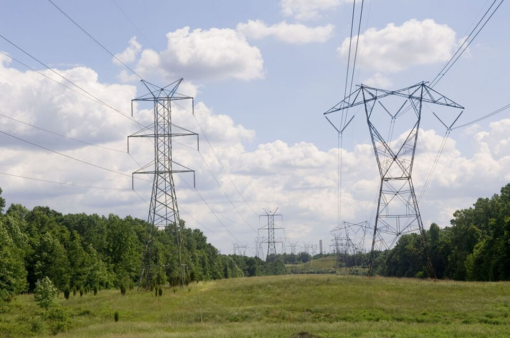
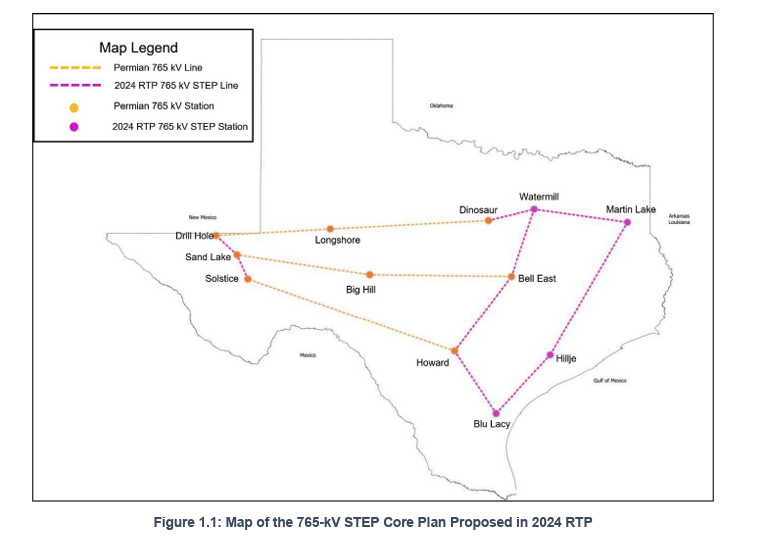
At issue is electricity delivery company Oncor’s Dinosaur Switch to Longshore Switch 765-kV transmission line, spanning 235–270 miles from near Glen Rose to west of Forsan.
It is part of the 765-kV Strategic Transmission Expansion Plan (STEP) Permian, which proposes three transmission lines spanning more than 1,200 miles to move electricity from East Texas to the natural gas-rich Permian Basin. Pro-landowner group American Stewards of Liberty has likened the project “to hauling water to the sea.”
Dinosaur to Longshore would join with the Longshore to Drill Hole line to form the northern line.
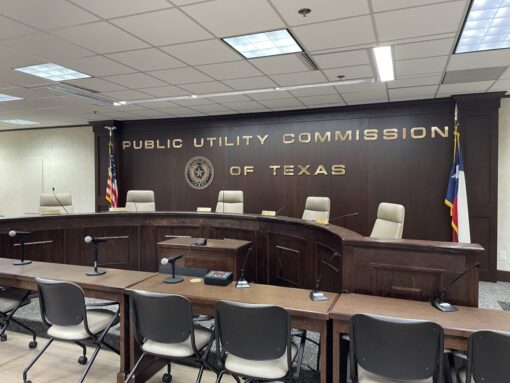
PUCT approved both segments on August 28, ignoring calls from impacted landowners and lawmakers to deny all pending 765-kV applications. The Middle Trinity Groundwater Conservation District (GCD) joined others in filing a rehearing motion.
Its stated purpose is to protect the Trinity Aquifer System in Bosque, Comanche, and Erath Counties from contamination, and avoid a situation requiring removal of transmission infrastructure.
Middle Trinity GCD wrote that its records show “hundreds, if not thousands of known water wells” in those counties are unaccounted for in Oncor’s application documents. It alleged Oncor never contacted it before submitting its application.
“The District has never opposed this project or any particular route. Our only goal is to make sure the water wells in the right-of-way are identified and addressed before construction makes that impossible,” Middle Trinity GCD General Manager Patrick Wagner wrote to Texas Scorecard.
Aquifer Threats
Middle Trinity GCD listed potential threats to its aquifer systems from Oncor’s 765-kV line.
It stated that prefiled testimony, from itself and Wagner, gave “ample evidence” displaying “how open or improperly plugged well bores provide a direct vertical pathway through the protective geological layers” that shield and silo the aquifer system from contamination.
The district wrote that “abandoned or improperly sealed wells bypass” the soil and sediment natural filtration process, creating “a direct conduit” linking the surface and the aquifer. Such a conduit, the district argued, allows “surface contaminants to enter the aquifer without filtration.”
“This threat is of particular risk in the Trinity Aquifer system where the aquifer is comprised of multiple stacked productive formations, where a single well bore connecting multiple zones under different pressures allows lower-quality water to migrate into higher-quality zones and allows any contaminants to negatively impact multiple aquifer formations,” the district wrote.
Middle Trinity GCD stated that mitigation efforts to counter transmission line impacts are time-sensitive. Once construction on a 765-kV line starts, wells located immediately adjacent or below the line infrastructure are “likely to be rendered physically inaccessible,” and legally required well plugging “becomes physically impossible to perform.”
The district described any well in that state as permanently transformed into “an open contamination pathway into the aquifer systems that can never be remediated” without removing the transmission infrastructure.
Oncor replied “the record evidence alleges only a generalized possibility that construction near an unidentified abandoned or improperly plugged well could create contamination risk.”
It argued there is “no record evidence” of “unidentified or improperly plugged wells” in the project right-of-way that cannot be mitigated, “a quantifiable risk of groundwater contamination” upon encountering such a well, or that “Oncor’s established practices are inadequate to address any such risk that may exist.”
Oncor wrote it will do “pre-construction surveys and geotechnical analyses” along the whole PUCT-selected route “to identify wells and other features,” and “can work with landowners to span any identified wells or even to adjust the right-of-way to avoid” them.
Spanning places transmission line towers so that the conductors pass over sensitive areas, like wells, without placing a structure foundation on or immediately near it.
“While Oncor does not dispute that improperly drilled or plugged wells can present risks to groundwater resources,” the electricity delivery company maintained that “it will be able to avoid such impacts” by spanning wells “to the extent they exist.”
Requested Order Change
Oncor wrote “it will voluntarily consult with” groundwater conservation districts in the event it finds “improperly plugged or abandoned wells that cannot reasonably be avoided,” and concluded that “construction may materially affect groundwater resources.”
It pointed out PUCT’s order requires Oncor to comply “with applicable groundwater laws if improperly plugged or abandoned wells are discovered that cannot reasonably be avoided and may materially affect groundwater resources,” and to consult with landowners.
That’s not good enough for Middle Trinity GCD.
In his statement, Wagner wrote that “no state law requires Oncor to tell the local groundwater district when it finds one of these wells, or to have a plan for it. The administrative law judges heard the evidence and recommended a simple requirement to consult with the district and address the risk. We’re asking the Commission to restore that protection.”
Administrative Law Judges Pratibha Shenoy and Brent McCabe, in their July 24 proposal for decision, recommended requiring Oncor to report “any plugged or abandoned wells that are identified during the design and surveying efforts” to the appropriate GCD.
For such wells, they recommended Oncor identify if spanning can avoid impact, or in the event spanning is impossible, then the utility “shall consult” with the GCD and landowner on “the need to install” mitigation measures.
Middle Trinity GCD wrote that PUCT commissioners rejected the ALJs’ proposal on this matter, and deleted several related findings of fact, including those on GCD’s having regulatory authority and statutory duty on groundwater resources. It wants PUCT commissioners to restore these.
Oncor replied that the ALJs’ conclusion was incorrect. It cited PUCT Chairman Thomas Gleeson’s memo, stating he had “correctly explained” that removing these findings of fact and proposed requirement was “necessary for consistency with how” PUCT’s past orders addressed groundwater issues.
Regarding Middle Trinity GCD’s requested changes, Oncor wrote the record does not demonstrate its necessity, “is not grounded in law,” “creates ambiguity and potentially overlapping regulatory requirements and could cause construction delays and additional costs, all without a demonstrated benefit or a known risk of harm.”
Middle Trinity GCD countered that, because groundwater conservation districts are not statewide agencies with permitting and consultation powers, without the ALJs’ recommended requirements Oncor “could completely disregard” it “to the detriment of the state’s groundwater aquifers that GCDs are charged to protect.”
In response to a request for comment, Oncor pointed to its filed response. PUCT has previously stated it cannot discuss pending contested cases.
Water is a statewide concern.
As previously reported, the Texas Water Development Board in July gave initial approval to its 50-year, $174 billion plan for the state’s future water needs. The TWDB has stated it does not evaluate transmission line impacts on water sources. Each of Texas’ 16 regional water planning groups is responsible for its own regional water plan.
The Region G Planning Group includes Bosque, Comanche, and Erath Counties. Tony Smith, project manager for the group’s technical consultant, stated in May that “as far as I’m aware,” the group had “not been contacted about this project.”
Critics have argued that PUCT, ERCOT, and Oncor transformed a regional reliability directive for the Permian Basin into a de facto statewide 765‑kV grid plan without state lawmakers’ authorization. Jason Isaac of American Energy Works stated that the fact that multiple parties are asking PUCT for a rehearing, and that these motions on the commission’s October 15 agenda, “is a clear sign” their approval orders “were rushed.”
PUCT announced commissioners will not hear oral arguments on the rehearing motions but will accept written comments submitted through the PUCT Interchange.
The Texas Public Policy Foundation estimates that the lifetime cost of all STEP projects ERCOT approved through December 2025 will approach $100 billion, to be borne by ratepayers.