A government agency is trying to hide emails “regarding expanding the scope” of a controversial extra-high-voltage transmission line project. The agency claims this language is about meeting “technical grid reliability standards.”
Landowners and lawmakers want regulators to delay the project until after the 2027 state legislative session.
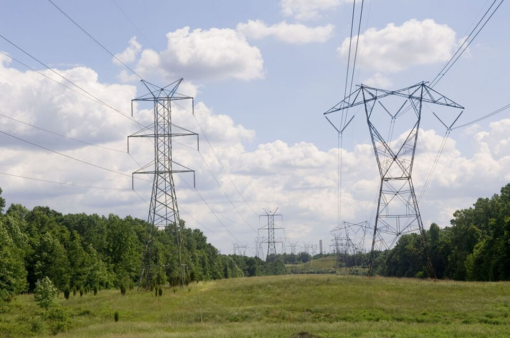
This centers on the 765-kilovolt Strategic Transmission Expansion Plan (STEP) Permian, a key part of the Permian Basin Reliability Plan (PBRP). STEP Permian proposes three transmission lines spanning more than 1,200 miles to move power from East Texas to the natural gas-rich Permian Basin, with lifetime costs reportedly approaching $100 billion to be borne by ratepayers. A pro-landowner group likened this project “to hauling water to the sea.”
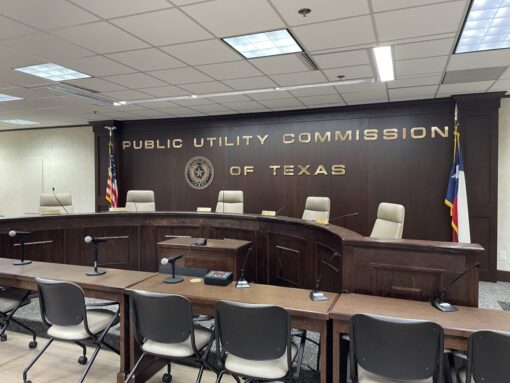
The three proposed lines are split into five interconnected segments that would cross North, Central, and South Texas. The Public Utility Commission of Texas (PUCT) must approve each segment.
The Lower Colorado River Authority Transmission Services Corporation has partnered with Oncor on two segments of this project that would cut across more than 380 miles from just north of Austin to about six miles northeast of Pecos.
LCRA appealed a July 7 Public Information Act request for its communications with 765-kV partners Oncor, American Electric Power, and CPS Energy. The request also covered communications with PUCT, ERCOT, and certain lobbyists. The timeframe for the request was from March 1, 2025, to the date a search is conducted. Texas Scorecard later clarified the request sought communications with certain keywords related to the STEP Permian lines.
On August 11, LCRA sent an extensively redacted copy of its brief to the Office of Attorney General Ken Paxton in which it was “exercising its right to request an opinion.” This brief mentioned emails in March 2025 “regarding estimated costs to expand the scope of the Permian Basian [sic] Reliability Plan 765-kV project,” and that these communications “provide specific details regarding the planning, operation, and protection of critical grid infrastructure” and “reveal potential vulnerabilities related to the ERCOT transmission grid.”
When asked about this, an LCRA spokesperson wrote that “The language you asked about refers to technical deliberations among LCRA, transmission service providers and ERCOT (at ERCOT’s request) to ensure specific critical infrastructure components meet technical grid reliability standards.”
Critics have argued that PUCT, the Electric Reliability Council of Texas (ERCOT), and electricity delivery company Oncor transformed a regional reliability directive into a de facto statewide 765‑kV grid plan without an explicit vote by state lawmakers.
PUCT Chairman Thomas Gleeson admitted in a July state senate committee hearing that lawmakers never mandated the 765-kV project.
LCRA Senior Associate General Counsel Vic Ramirez cited in the brief several exceptions in state law for releasing records. First is the deliberative process provision, which he wrote “protects from disclosure intraagency and interagency communications consisting of advice, opinion or recommendations on policymaking matters of the governmental body at issue.”
Second is an exception for information “considered to be confidential by law, either constitutional, statutory, or by judicial decision.” Third is Texas Homeland Security.
In citing this provision, Ramirez referenced emails that “provide detailed analysis regarding [REDACTED] the 765-kv Permian Basis Reliability Plan transmission line projects.”
He claimed that emails regarding the extra-high-voltage project “describes and depicts critical details and vulnerabilities that can be used to plan and carry out a terrorist or criminal act, including the disruption or destruction of critical transmission and substation infrastructure and threatening the safety of the public in the area.”
In a recent interview on “Real Texans,” State Rep. Brad Buckley (R–Salado) spoke about the transmission project and said, “I think at some point it’s got to be more transparent and that we just need to pause it.”
PUCT, whose commissioners are Gov. Greg Abbott appointees, will discuss the STEP Permian lines on August 14. Gleeson has stated “no final decisions will be made” on any individual line.
This came after Lt. Gov. Dan Patrick called for PUCT to deny all pending 765-kV applications until after state lawmakers reform the approval process in 2027. Gov. Abbott has since called for “guidelines and guardrails” on transmission line expansion.
State lawmakers created LCRA in 1934. Today, the government agency’s responsibilities include generating and transmitting electricity, managing the lower Colorado River and state parks, and providing water.
LCRA is up for sunset review by state lawmakers in 2034-35. PUCT is up in 2028-29. Neither PUCT nor ERCOT responded to a request for comment before publication.
The STEP Permian lines are just the initial phase of a multiphase project that would result in 765-kV lines, never before built in Texas, crisscrossing the state. The STEP Eastern lines are already spinning up with applications to PUCT expected in early 2027.
If you are a citizen with information regarding bureaucratic overreach, please email scorecardtips@protonmail.com