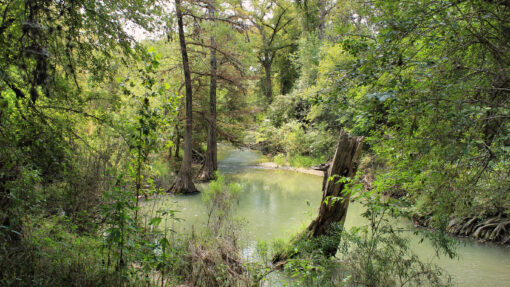
A document obtained from the Texas Parks and Wildlife Department showed recommended buffers ranging from 0.25 miles to as much as 5 miles between portions of state-owned lands and proposed 765-kilovolt transmission lines.
Private citizens, meanwhile, have been fighting to keep the proposed lines off and away from their properties.
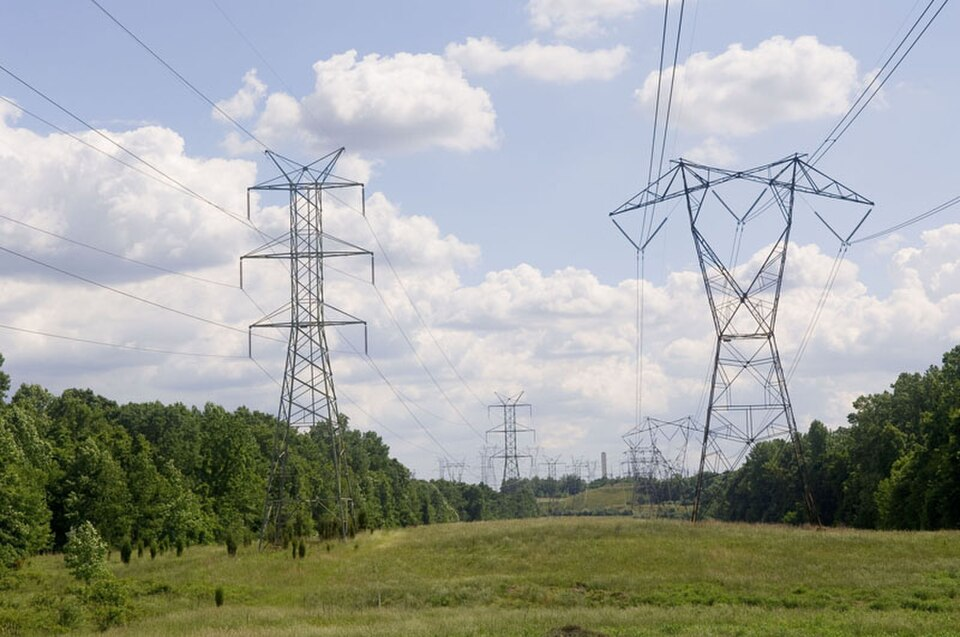
This centers on the 765-kV Strategic Transmission Expansion Plan (STEP), a key part of the Permian Basin Reliability Plan (PBRP). STEP proposes three transmission lines spanning more than 1,200 miles to move power from East Texas to the natural gas-rich Permian Basin. A pro-landowner group likened this project “to hauling water to the sea.”
The three proposed lines are split into five interconnected segments that would cross North, Central, and South Texas. The Public Utility Commission of Texas (PUCT) must approve each segment. Critics have argued that PUCT, the Electric Reliability Council of Texas (ERCOT), and electricity delivery company Oncor transformed a regional reliability directive into a de facto statewide 765‑kV grid plan without an explicit vote by state lawmakers.
The Texas Parks and Wildlife Department (TPWD) document, obtained through a Public Information Act request, recommended setback buffers for more than 10 TPWD properties, including Silver Lake, Bear Creek, and Dinosaur Valley state parks.
The recommended buffers are for three of the proposed 765-kV line segments. First is AEP Texas and CPS Energy’s proposed Howard to Solstice line, stretching approximately 370 miles across 14 counties in South and West Texas. Second is Oncor’s Dinosaur Switch to Longshore Switch segment, which spans approximately 235–270 miles from Somervell County to Howard County. Last is Oncor and the Lower Colorado River Authority’s (LCRA) Bell County East-to-Big Hill segment, spanning about 199 miles from just north of Austin to south of San Angelo.
Kevin Kennedy, an affected landowner opposing the proposed 765-kV lines, was aghast that state-owned land could potentially receive wider leeway than private landowners’ property.
“TPWD (the State) asks for significant separation from their assets but simultaneously offers little to no separation for a private citizen’s assets,” he wrote. “How can the State of Texas rationalize it is reasonable to pose no restriction or consequence to locating a line 501′ from a house or a school, but in the same breath they want the line 1,300′ from the boundary of a pasture the State owns[?] It’s despicable.”
When asked about the TPWD document and the buffer requirements for public versus private land, a PUCT spokesperson wrote that “State law does not prescribe what you term ‘buffer zones’ in your question.” He pointed to a specific state law that he wrote “lists what the Commission shall consider in deciding a transmission line application.” That law is the Public Utility Regulatory Act, Sec. 37.056, on Grant or Denial of Certificate.
While “setback buffers” do not appear in the act, “parks and recreational areas” are one of the factors for PUCT consideration.
Andrew Clark of Oncor provided a statement addressing the document. “It is important to note that while habitable structures, parks and recreational areas and other features must be considered during the routing process, state requirements do not mandate that new transmission lines be routed specific distances from these features, but that the specific distances be used to outline project notice requirements,” he wrote.
Clark continued that “Oncor’s route development process incorporates feedback from public stakeholders such as TPWD and follows the Public Utility Regulatory Act and the Public Utility Commission of Texas’ Substantive Rules, including how they pertain to habitable structures, parks and recreational areas and other features. The EAs [Environmental Assessments] within each application list, quantify, and describe the spatial relationships of these and other features as required.”
Clara Tuma of LCRA wrote that “the proposed alternate routes comply with all rules from the PUC, which will determine the route of the line.”
When asked to define “alternate routes,” she replied that “transmission service providers must identify an adequate number of geographically diverse alternative routes that meet the criteria set out in the Public Utility Regulatory Act and PUC rules.” Clark described them as “a subset of the alternative routes evaluated in the EA, which can include thousands of potential routes connecting the project endpoints.”
PUCT commissioners, appointed by Gov. Greg Abbott, tapped the brakes on the project on June 17, when they unanimously voted to “abate” a decision on the first segment of the proposed lines until they take up the third segment. This followed growing grassroots opposition and widespread criticism.
The Texas Legislature is showing increasing interest.
The Senate Committee on Business and Commerce announced it will hold a public hearing July 29 on the state grid and ways to mitigate the impacts of 765-kV lines on private property rights. This followed more than 40 state lawmakers and the Texas Public Policy Foundation asking PUCT to pause the project until the legislature can take it up in 2027. TPPF argues the solution for the Permian Basin’s power needs—driven by an overreliance on unreliable wind and solar—is “broader wholesale market reform” rather than the massive transmission line project.
PUCT commissioners are expected to take up the third 765-kV segment in August. AEP Texas, CPS Energy, and Texas Parks and Wildlife did not respond to a request for comment before publication.
If you are a citizen with information regarding bureaucratic overreach, please email scorecardtips@protonmail.com.